

The iPhone 12 Pro is here, and after living with it for a fairly decent amount of time, I think it's time to answer that one burning question — is it worth it? Apple has made choosing between iPhone models even tougher this year by introducing four new models, all sharing similar specifications and features, but at vastly different prices. In India, especially, the price difference between the iPhone 12 series and the iPhone 12 Pro series is massive – and that's a whole separate discussion.
As a long-time iPhone 11 Pro user, I was curious to see how much Apple has improved in the new iPhone 12 Pro, because I'll be honest, I wasn't exactly blown away during its announcement. The new SoC, tweaked cameras, and fresh design were all expected upgrades, and it will take more than that to make someone shell out Rs. 1,19,900 for it, in my opinion. Let's break it down and see if it makes sense choosing the iPhone 12 Pro over the lower priced iPhone 12.
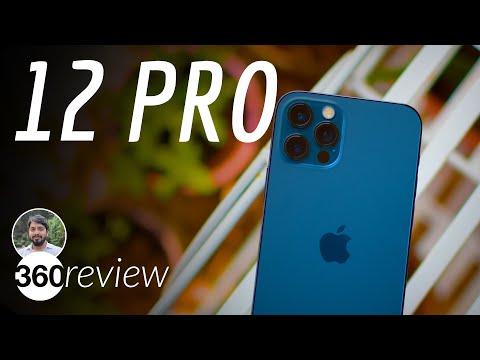
iPhone 12 Pro pricing and variants
The iPhone 12 Pro costs quite a bit more in India than in other regions including the US. The iPhone 12 Pro starts with a 128GB variant which is priced at Rs. 1,19,900. The 256GB storage variant will cost you Rs. 1,29,900, and the top-end 512GB variant will cost you Rs. 1,49,990 (which is the one I have). That's a pretty steep price for any smartphone, and keep in mind, the iPhone 12 Pro Max is even more expensive. This is before you even add things like AppleCare+ and accessories. The iPhone 12 Pro is available in four colours, of which the Pacific Blue shade is new, and is my favourite so far.
Apart from the new colour, the iPhone 12 Pro has a flattened stainless steel frame, versus the rounded sides of every model since the iPhone X. It's a big change but not something we haven't seen before. Apple first used a flat frame for the iPhone 4 and stuck with it all the way to the iPhone 5s, before switching to rounded sides. Love it or hate it, you'll have to get used to this design for at least the next few iPhone generations.
Apple is going back to a flat frame like that of the iPhone 4 with its new iPhone 12 series
After two weeks of usage, I've grown accustomed to the iPhone 12 Pro. It's comfortable to hold and a tad easier to grip than the iPhone 11 Pro, in my opinion. However, it's nearly impossible to keep the glossy frame smudge-free. While stainless steel should be a lot more durable than the aluminium frame used for the regular iPhone 12, the same cannot be said about the paint job. After an accidental fall from just a couple of feet onto a metal railing, my iPhone 12 Pro has a permanent battle scar on its chin. The finish is clearly not as resilient as the metal frame itself.
Most of the ports and buttons are placed the same as on the iPhone 11 Pro. The buttons have good feedback and are flat. The SIM card tray has been moved to the left side of the phone. The iPhone 12 Pro only supports a single physical Nano-SIM, but an eSIM option is present. The models sold in India lack the little cutout on the right side of the frame for the millimetre wave (mmWave) 5G antennas that you can see on the versions sold in the US. More on 5G in a bit.
The display on the iPhone 12 Pro is larger than the one on the iPhone 11 Pro. It measures 6.1 inches (vs 5.8 inches) and features a new cover glass material that Apple calls Ceramic Shield. This is said to offer up to four times better shatter resistance than the iPhone 11 Pro's display, but this doesn't necessarily mean it's more resilient to scratches. I didn't notice any hairline scratches on the 12 Pro's display in the two weeks that I used it.
Other than its size and the new glass, the characteristics of the display haven't changed much. Like the iPhone 11 Pro, the iPhone 12 Pro uses a Super Retina XDR OLED panel with a peak brightness of 1,200nits (800nits typical) and has a 2,000,000:1 contrast ratio. It also supports multiple HDR formats: HDR10, Dolby Vision, and HLG.

The iPhone 12 Pro has one of the best displays out there
The iPhone 12 Pro is a bit taller than the iPhone 11 Pro, but is slimmer (7.4mm) and weighs about the same. The increase in size took a bit of getting used to, coming from the 11 Pro, but if you're switching from the iPhone 11 or any older ‘Plus' model, the transition should be easier.
Coming to the bundled accessories, there isn't much in the box. The iPhone 12 Pro ships in a slimmer box than before, and that's because there's just a USB Type-C to Lightning cable and some documentation in it. Apple stopped shipping the Lightning to 3.5mm headphone adapter with the iPhone XS, and now it's removed the headset and power adapter too. While other companies have had a field day mocking Apple for this decision, some of them might just be heading in this direction too if rumours are to be believed.
iPhone 12 Pro specs and performance
Apple has been ahead of the curve for a long time now when it comes to the SoCs used in iPhones, and this time is no different. The iPhone 12 Pro uses the A14 Bionic SoC, which is also the first 5nm SoC in a smartphone. For 5G, Apple is using Qualcomm's X55 modem similar to the one used with Qualcomm's own Snapdragon 865 SoC. There's no mmWave support with the Indian models, but the iPhone 12 Pro supports all popular sub-6GHz 5G bands.
In terms of power, the A14 Bionic promises up to 50 percent better CPU and GPU performance compared to the previous generation, which is still very powerful. The biggest change is in Apple's Neural Engine logic in the SoC, which is now 16 cores strong (up from eight cores previously) and promises up to 80 percent faster performance in machine learning tasks.
The iPhone 12 Pro has 6GB of RAM, going by Geekbench 5's diagnostics and other sources, which is 2GB more than the iPhone 12 and even the iPhone 11 Pro. Other features include Wi-Fi 6, Bluetooth 5, Ultra Wideband (UWB), support for multiple satellite navigation systems, and NFC. The iPhone 12 Pro offers Face ID for biometric authentication using Apple's TrueDepth 3D camera system. It's also is rated to function at depths of up to 6m for up to 30 minutes, compared to up to 4m for the iPhone 11 Pro even though it has the same IP68 rating. Finally, the Pro models this year also get a LiDAR scanner, which was first introduced with the iPad Pro (2020) earlier this year.
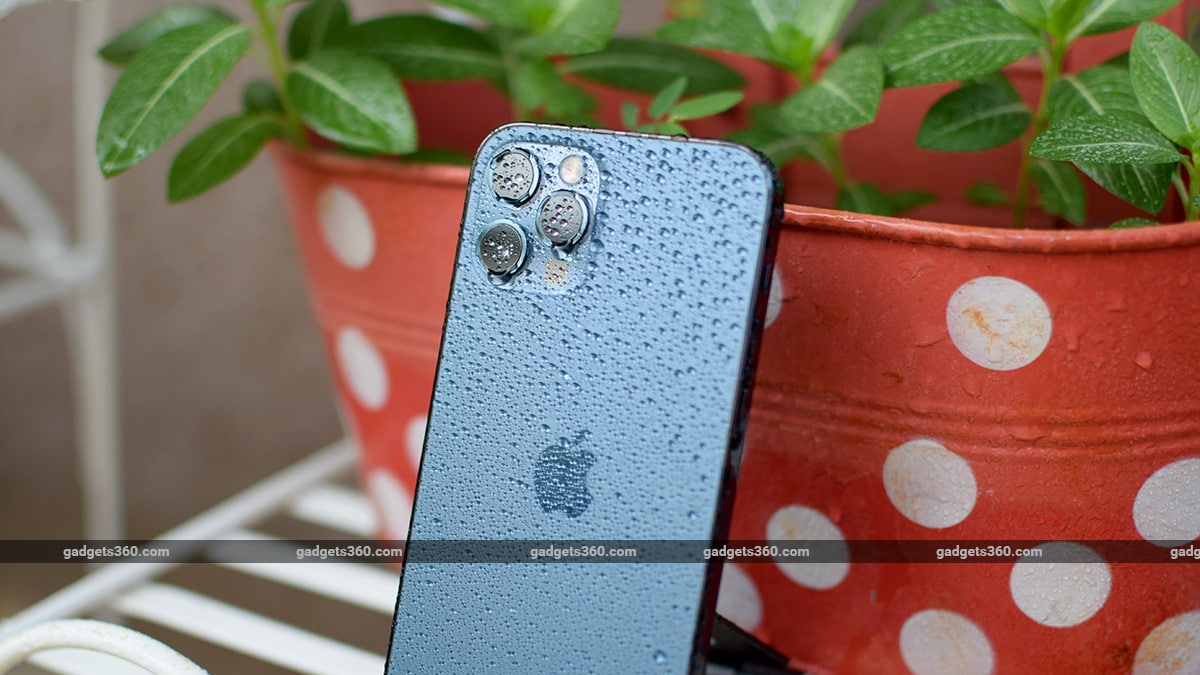
The iPhone 12 Pro can be submerged up to 6m deep in water for up to 30 minutes
Before we get to its performance, let's take a quick pit stop and talk about the software. The iPhone 12 Pro runs iOS 14.1, which is also available free for many recent and even older iPhone models. Coming from the iPhone 11 Pro, the experience with the iPhone 12 Pro is more or less identical, other than some new static and live wallpapers. iOS 14 introduced new customisation options and there are some cool hidden features worth checking out too.
Thanks to the LiDAR scanner, augmented reality apps work a bit better than they do on the iPhone 11 Pro. The more precise spatial information captured by the LiDAR scanner lets apps such as Apple's own Measure app easily estimate the height of a person if you simply point the camera at them. Performing actual measurements is also more precise, although not always exact when compared to an actual measuring tape. Apple has also added a ‘People Detection' feature in its Magnifier app, which uses the LiDAR scanner to help visually impaired people detect others around them via audible alerts. This feature is now available in iOS 14.2.
As I mentioned earlier, I used the iPhone 12 Pro as my primary phone for about two weeks, and the experience was very good. I didn't notice a world of a difference with day-to-day usage coming from an iPhone 11 Pro. Call quality was good on 4G networks, and if your ISP supports Wi-Fi calling, the 12 Pro will automatically switch to it. The flattened edges of the 12 Pro felt a bit sharp against my ears at first when on a call, but I got used to this.

Games run great on the iPhone 12 Pro, but it also heats up quite a bit
The slightly larger display on the iPhone 12 Pro (compared to the 11 Pro) makes it a great multimedia playback device. Streamed videos looked great, especially HDR ones. Colours were lively, blacks were deep, and the display got really bright when needed. The stereo speakers sounded really good too. The sound is loud and detailed without any audible distortion even at the highest volume level.
I also found myself gaming a lot on the iPhone 12 Pro. Games from Apple Arcade ran smoothly and looked fantastic. However, the 12 Pro gets quite hot very quickly if you're playing anything graphically intensive. You might not notice this with a cover on, but without it, the metal frame can get very hot. Samurai Jack was the only game in my experience that brought the iPhone 12 Pro to its knees. Just a few minutes in, the framerate would tank badly during battles, making this game almost unplayable. This could be down to just an issue of optimisation for the new SoC, since Oceanhorn 2, a visually superior game, ran just fine.
iPhone 12 Pro battery life and MagSafe
Apple doesn't advertise the battery capacities of its iPhones, but going by some of the recent teardown findings, the iPhone 12 Pro seems to have a 2,815mAh capacity, which is lower than that of the iPhone 11 Pro. This would be laughable on an Android smartphone in 2020, but on an iPhone, it's adequate for everyday use. On average, I was able to cross a full day and get a few more hours of use the next day before the battery level dropped below 10 percent. With heavier use, I was still getting close to a full day.
For most people, I think this should be satisfactory. These results were on a 4G network, as 5G is still a distant dream in India, and battery life is expected to be lower when connected to 5G networks. Our HD video battery loop test ran just shy of 15 hours, which is good but not the best.

The iPhone 12 Pro supports Apple's MagSafe wireless charging ecosystem
Charging the iPhone 12 Pro can be a pain if you don't already own a Type-C power adapter. You can charge it from a computer, but it will be very slow and you'll need one with a Type-C port. Apple will happily sell you its new 20W Type-C adapter for Rs. 1,900, which is said to charge the 12 Pro's battery up to 50 percent in half an hour. I had the 18W adapter from the iPhone 11 Pro, and with it, I managed a surprising 58 percent charge in half an hour. The charging speed begins slowing down after this, and after 30 more minutes, the battery had charged to 87 percent. In total, it took about 1 hour, 40 minutes to fully charge the iPhone 12 Pro's battery.
If you want to be hip, you can opt for one of Apple's new MagSafe chargers. The iPhone 12 Pro and the rest in the series support MagSafe chargers and accessories, which are designed to magnetically latch onto the back of the iPhone (thanks to magnets in the charger and in the phone itself) for optimal contact. I've been using Apple's basic MagSafe charger which costs Rs. 4,500 and is able to deliver up to 15W of wireless charging as long as you also buy Apple's own adapter. The magnets are quite strong, and the charger stays secure on the back of the iPhone unless you yank it off with force.
A few things to note about Apple's MagSafe charger. Yes, you can use it with any device that supports Qi wireless charging, but it will work slower. It will not charge an Apple Watch, but for this, Apple will happily sell you the MagSafe Duo charging station for Rs. 13,990. MagSafe should work if you use a third-party case on your iPhone 12 Pro, provided it sticks to Apple's guidelines regarding thickness. You could also buy Apple's own MagSafe cases, which I happen to have one of, to guarantee compatibility.
While MagSafe is a cool way to charge your new iPhone 12 Pro, I would still stick to wired charging, and here's why. Apple's MagSafe charger doesn't have a very long cable so you'll need to be closely tethered to your wall socket anyway. Second, the charger gets very hot so it's not exactly comfortable to hold and use the phone while it's charging. Third, Apple very clearly states that the power delivered to your iPhone via MagSafe will vary depending on temperature and system activity. This means if the charger is too hot or if you're gaming, an iPhone isn't going to charge quickly, which is something I noticed.
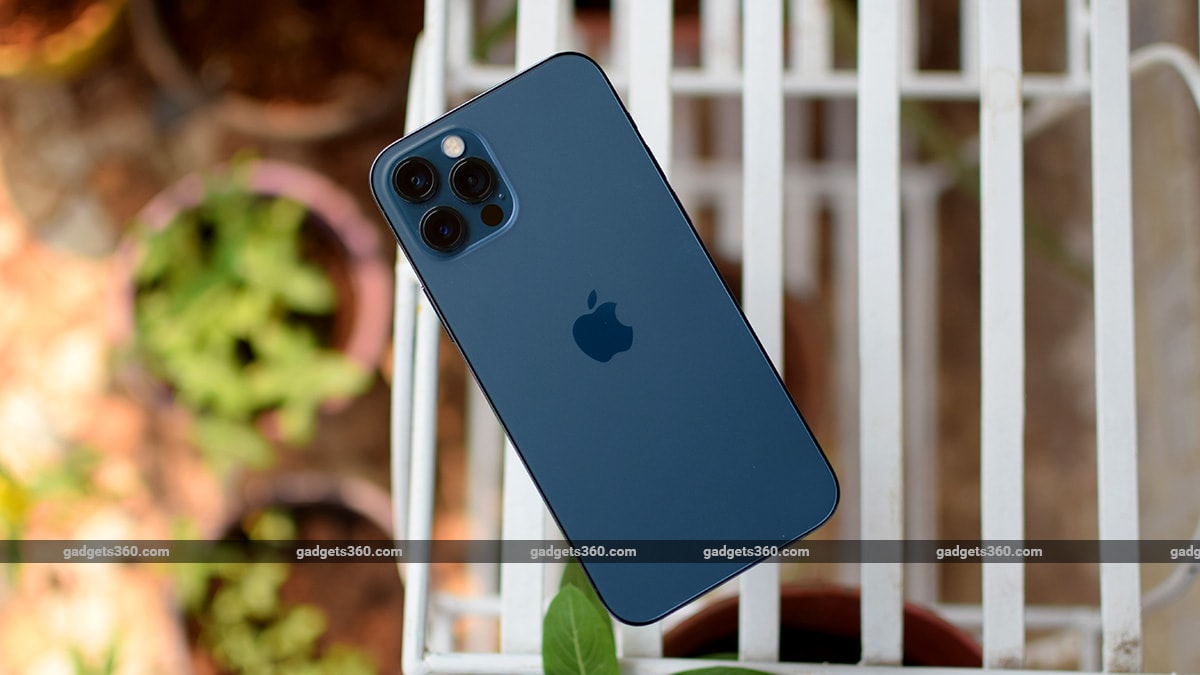
The iPhone 12 Pro delivers all-day battery life, which should be enough for most users
I didn't have Apple's 20W adapter, but when connected to a Motorola 27W Type-C adapter, the iPhone 12 Pro began trickle charging after about 60 percent. In fact, the charging got so painfully slow that even after nearly three hours, the iPhone 12 Pro's battery barely made it to 70 percent. I noticed this behaviour when using Apple's 18W and 30W Type-C power bricks too.
I had slightly better results when charging through a MagSafe case, rather than having the pad directly in contact with the iPhone, but it still slowed down due to the heat produced by the charger. If you have a silicone MagSafe case, the MagSafe charger will leave a faint mark on it but it did fade away after a while, at least during the review period.
Overall, I'd wait to see how third-party chargers perform, or whether Apple addresses this heating issue somehow.
iPhone 12 Pro cameras
On the surface, it would seem that Apple hasn't changed the camera setup a whole lot compared to the iPhone 11 Pro. However, the iPhone 12 Pro does boast of some new features, and one in particular could just be a solid enough reason to get the 12 Pro. I am of course talking about the iPhone 12 Pro's ability to record Dolby Vision HDR video, which in my opinion, is a game-changer.
There's a toggle in the camera app's settings that lets you enable or disable this feature. When enabled, the iPhone 12 Pro lets you record up to 4K 60fps video in Dolby Vision HDR. This HDR format is becoming increasingly common even for budget TVs, and many streaming services now use it. Most of the Apple original shows on Apple TV+ support Dolby Vision already. iPhones have long supported HDR playback, and the recent iOS 14.1 update even enabled 10-bit HDR playback support on the iPhone 8 and some older models.

Dolby Vision HDR recording is easily the biggest draw for Apple's iPhone 12 series
Videos shot in Dolby Vision look amazing on the iPhone 12 Pro's display. It's not just about having a brighter picture, but due to the wider 10-bit colour gamut, colours look richer and you get a better sense of the intensity of light in bright scenes while still having perfect blacks in the shadows and darker areas — much like how your eyes would see the world. Most HDR movies and TV shows we consume have to go through a rigorous mastering process on equipment that would typically cost lakhs of Rupees. The fact that you can now shoot similar-looking content with your smartphone is incredible. The best part is that the iPhone 12 Pro can shoot Dolby Vision videos with all its cameras.
There's a small catch though, when it comes to sharing such videos. The iPhone 12 Pro is said to use a newer version of Dolby Vision called Profile 8.4 which is based on the HLG or Hybrid Log Gamma HDR standard. The problem is, most social platforms and services don't support this new format yet, which makes uploading or sharing your Dolby Vision video the way it's intended to be viewed, quite tricky. YouTube will render an HDR version of the video you capture, provided you upload it through a browser like Safari and not the YouTube app.
Sending an HDR video shot with an iPhone 12 Pro via AirDrop or iMessage is currently the best way of ensuring that it will look as intended. Sharing via WhatsApp or Telegram degrades the quality heavily, at the moment. Apple's iMovie and Clips apps will let you edit and export your videos without HDR if needed, but that's a bunch of extra hoops you have to jump through. It's a temporary setback, but I do think most of the popular social platforms and services will add support for Apple's HDR implementation sooner, rather than later.
Video shot during the day with all three rear cameras is excellent. Colours look natural, there's plenty of detail, and stabilisation works very well even if you switch sensors mid-recording. Video recorded in low light continues to impress, although in very dark scenes, footage can look a bit noisy if you move about. The ultra-wide-angle camera produces noticeably weaker details in low light for video.
The iPhone 12 Pro uses 12-megapixel sensors for all its cameras, just like on the iPhone 11 Pro, but with some changes. The main rear camera now has a wider f/1.6 (vs f/1.8 on the 11 Pro) aperture. All cameras now support Night Mode and Deep Fusion, which is great to see. The telephoto camera can still only zoom up to 2x optically, but it is stabilised. The iPhone 12 Pro can also take Night mode Portrait shots, which again is a welcome addition.

iPhone 12 Pro main camera sample (tap to see larger image)

iPhone 12 Pro ultra-wide camera sample (tap to see larger image)

iPhone 12 Pro close-up camera sample (tap to see larger image)

iPhone 12 Pro telephoto Portrait camera sample (tap to see larger image)
In daylight, the iPhone 12 Pro captures excellent-looking shots with plenty of details and rich colours. Autofocus is very quick and dependable on the main rear camera. The ultra-wide camera is equally adept given ample light. The quality of photos taken with the telephoto camera is decent as long as you stick to 2x magnification, as images lose sharpness quickly once you move beyond that. Phones such as the Samsung Galaxy S20+ can easily crush the iPhone 12 Pro when it comes to zoom capabilities.
In low light, the iPhone 12 Pro automatically engages Night mode, and depending how steady your hands are, the shutter can stay open for anywhere from one to three seconds. If you use a tripod, you can get an even longer exposure time. With the primary camera, I noticed very little difference between the iPhone 12 Pro and the iPhone 11 Pro. The iPhone 12 Pro produced a mildly brighter image, but details were nearly identical. It does fare much better than the Samsung Galaxy S20+'s Night mode when it comes to preserving the textures of objects.

iPhone 12 Pro low-light main camera sample (tap to see larger image)

iPhone 12 Pro low-light ultra-wide camera sample (tap to see larger image)

iPhone 12 Pro low-light close-up camera sample (tap to see larger image)
The iPhone 12 Pro really shines when it comes to low-light ultra-wide shots, which are miles ahead of what the iPhone 11 Pro can produce. Details are still a bit lacking when compared to samples from the Galaxy S20+'s ultra-wide camera, but this could very well change in the next generation. The telephoto camera on the iPhone 12 Pro isn't used much in low-light as the phone simply digitally zooms in using the main camera.
Low light is also where the iPhone 12 Pro's LiDAR scanner kicks in to assist with autofocus. The difference is noticeable when shooting close-up subjects, as the phone is able to detect objects much better in extremely dim lighting. When compared to the iPhone 11 Pro, the results are quite impressive.
Portrait shots are another area in which the iPhone 12 Pro excels. You can shoot using the telephoto or main camera, depending on the perspective you're going for. Low-light portraits look great too thanks to Night mode.

iPhone 12 Pro Night Portrait camera sample (tap to see larger image)
Images shot using the selfie camera in daylight aren't too different from what you get from the iPhone 11 Pro. Skin tones look good, albeit mildly smoothened, and the camera picks up a decent amount of detail. Portrait mode works well. However, the iPhone 12 Pro leaves the 11 Pro behind when shooting selfies in low light. Thanks to Night mode, you can get very usable shots even in extremely dark situations.

iPhone 12 Pro selfie camera samples
There's one more feature that will be coming to the iPhone 12 Pro series later, called Apple ProRAW. Just like Deep Fusion, this is said to be natively enabled in the camera app. Unlike most Android phones, which make you use a different mode to shoot in RAW, Apple ProRAW on the iPhone 12 Pro will capture a regular photo along with a lot of extra information similar to a RAW file. This, in theory, should give you much more flexibility when editing photos without having to deal with different file formats. Apple says you'll be able to edit photos leveraging this information directly in the Photos app and other supported editing apps.
Verdict: Should you upgrade to the iPhone 12 Pro?
We've covered a lot in this review, and if you've made it this far, then it's clear that even though the iPhone 12 Pro doesn't seem like a big upgrade on paper compared to the iPhone 11 Pro, there are many little changes that make for a better overall experience. Does this mean you should go ahead and upgrade? Well, not really.
Most of the meaningful upgrades such as the new Ceramic Shield material, larger display, better IP rating, new SoC, MagSafe charging, and Dolby Vision recording — are available on the iPhone 12 too, which costs way less. The iPhone 12 does have some differences such as a lower typical brightness and it can only shoot up to 4K 30fps with Dolby Vision. We're in the middle of reviewing that too, but I think it's safe to say that the standard iPhone 12 offers far better value for money than the iPhone 12 Pro, looking at their respective launch prices in India.
The only real ‘Pro' features exclusive to Apple's more premium series include the telephoto camera, LiDAR scanner, ProRAW, higher maximum storage, a more sturdy frame and a few extras such as Night mode for Portrait shots. Some of these features can be useful in the right scenarios, but paying nearly Rs. 40,000 more for them doesn't seem to make a whole lot of sense.
If money is burning a hole in your pocket and you're adamant on getting the best possible iPhone, I'd suggest also looking at the iPhone 12 Pro Max. Apple has used a larger primary camera sensor in this model, compared to the iPhone 12 Pro, and it also features sensor-shift stabilisation for the very first time in an iPhone, similar to what you get in premium mirrorless cameras. We just got our hands on this, and a full review is coming up soon.
The same can be said about the new MagSafe ring inside the rear of the phone. This lets you connect a variety of accessories to your iPhone, and it'll intelligently know what those are. Currently you're limited to a fast wireless charger, cases that tell the phone what color they are, and a clip-on credit card holder, but we're excited about the potential for this technology – and, as with 5G, as more MagSafe items are made, so will the utility of the 12 Pro improve.
The key thing you'd buy the Pro for is its cameras, and both the photos and videos they capture are superb. The vibrancy of the movies we shot, and the clarity and smart processing of the snaps, made us eager to share them with friends, and encouraged us to experiment more with the camera. Night mode is absolutely stunning too, if not a little slow to process your snaps.
In our iPhone 12 Pro review we found that battery life could be better – it's distinctly average in the 2020 smartphone environment. It's fine if you're not moving around too much, but if you're on the go and using the phone moderately, you'll see the charge meter dropping a little faster than you'd like. It feels like a tradeoff for the addition of 5G, so you'll need to decide whether that's a compromise you want to make.
That said, if you're upgrading from a iPhone from several generations earlier, you'll still see an improvement in battery life.
We've been struggling to see what in particular is great about the new iPhone 12 Pro, especially compared to the iPhone 12. The camera experience is the main thing that stands out, and the extra hardware in the form of the 2x zoom and the LiDAR feel like good reasons to spend a bit more.
If those things aren't important to you, the iPhone 12 is probably a better buy; but, if you want those things and more, you might want to spend extra and opt for the iPhone 12 Pro Max instead.
Of course, if you're not married to Apple there are also Android alternatives to consider, such as the Samsung Galaxy S21 and OnePlus 9 ranges, which also offer compelling flagship experiences. But the iPhone 12 Pro largely holds up well against them - despite these phones being newer than Apple's.
It remains one of the best iPhones, but if you just want the best phone from any brand then consider the Samsung Galaxy S22 Ultra.
iPhone 12 Pro review: price and release date
- Out now
- Starts at $999 / £999 / AU$1,699
The iPhone 12 Pro was announced alongside the iPhone 12, iPhone 12 mini and iPhone 12 Pro Max on October 13, 2020. While we originally expected to see the phones at the September Apple Event, in line with the typical iPhone launch window, the handsets were unveiled a month later, likely owing to the coronavirus outbreak’s impact on manufacturing and supply schedules.
The iPhone 12 Pro release date was October 23, 2020, and the iPhone 12 Pro Max followed later in November, but of course they're both readily and widely available now.
The iPhone 12 Pro price starts at $999 / £999 / AU$1,699 for the 128GB model – that's an improved minimum storage offering over both the iPhone 11 Pro and the base model of the new iPhone 12 – with the price rising to $1,099 / £1,099 / AU$1,869 for 256GB, and $1,299 / £1,299 / AU$2,219 for 512GB.
However, it's no longer available directly from Apple. Instead, you'll have to look for a price drop at third-party stores with retailers likely keen to shift ageing stock, despite its prowess.
iPhone 12 Pro review: design
- No charging block or EarPods in the box
- Tough Ceramic Shield protection
- Flat sides, unlike the previous model

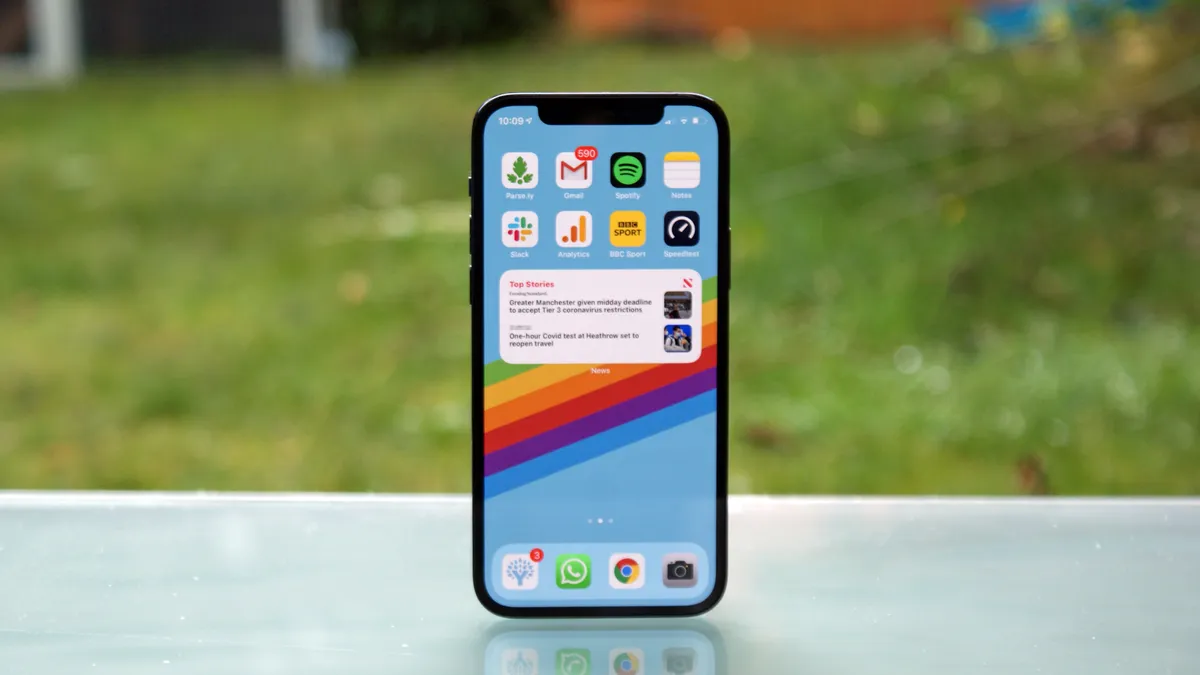
The iPhone 12 Pro design is different from 2019’s iPhone 11 Pro. Like all the handsets in the iPhone 12 range, it has flat sides with sharp, 90-degree edges.
It's hard to tell whether this is something that's primarily functional – more on this below – or just a change to the design language, to emphasize that this is a new iPhone, and an upgrade over the previous model.
That's actually rather key, because otherwise the iPhone 12 Pro looks similar in size to 2019's Pro, and many buyers will want something that screams 'Hey, look at me! New iPhone!', so aping the design of the new iPad Pro range is a smart move.
It's also unconfirmed whether the flatter design allows for better 5G signal strength - given that Apple wants the new iPhone range to become synonymous with the new speedy connection standard, it'll have been keen to implement anything that helps in that area.
Another new addition is the Ceramic Shield on the front, which replaces the glass from the iPhone 11. Apple has worked with Corning to create a structure that it says isn't actually glass, but rather a 'nano-crystalline' structure that has four times the strength of the iPhone 11's screen, so it should be harder to break your new iPhone.
And while the rear of the iPhone 12 Pro is still the same glass as used in 2019, the new edge design will apparently make it twice as resilient as its predecessor in the event of a drop.
It's important to note that Apple isn't calling these iPhones unbreakable – it’s just saying they're more robust. The IP68 rating has been improved to allow you to submerge your iPhone 12 Pro deeper than before, which in reality means it's more water-resistant (not waterproof, of course).
If the iPhone 12 Pro lands at the wrong angle after a slip or a drop, it can still break – our first unit suffered a crack across the rear glass after landing flat on concrete following a heart-stopping slip from a table, and small scratches landed on the rim.
So if you're thinking that you can do without a case and / or a screen protector, think again – the new iPhone 12 Pro screen can still be scratched by sharp objects, or the glass broken, even if it has a far greater degree of protection (especially on the front screen and with greater water resistance than ever before) than the iPhone 11 range.
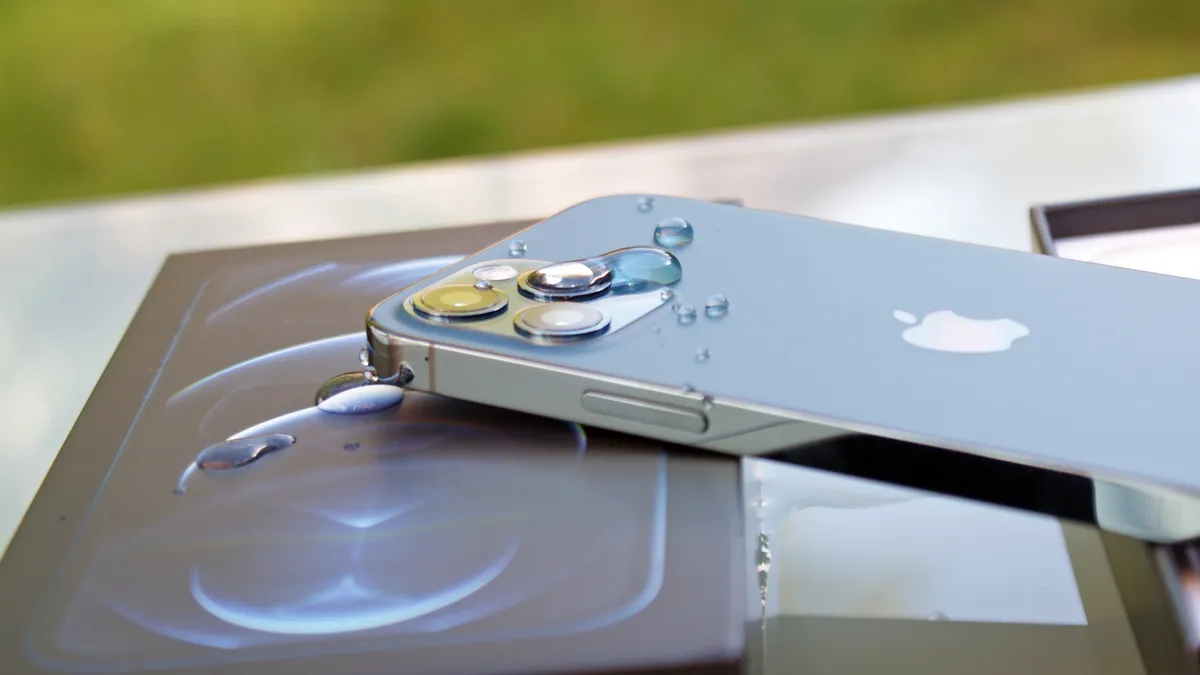
The flatter edges of this 6.1-inch-screened phone do make it easier to press the buttons on the sides, as they feel slightly more pronounced; the phone isn't more comfortable to hold than the iPhone 11 Pro, but it is a little easier to use.
And let's not forget about the new colors: the iPhone 12 Pro comes in Graphite, Silver, Gold and Pacific Blue, which are more muted and, well, professional-looking than the more garish options on offer with the iPhone 12.
One of the other big pieces of news here is the omission of a charging block and EarPods from the box. Apple claims this will have a huge environmental impact (and it probably will), and believes there's no need to include a charger because everyone already has one lying around.
That’s true – most of us have a drawer full of them. And if your Lightning cable is still functioning fine, then you've got nothing to worry about.
However, if you need a new Lightning cable and were waiting to get a new iPhone to get one, or if this is your first iPhone, you'll need to buy a new charging block, as the cable in the 12 Pro box is USB-C to Lightning, which is a newer type of connection, and relatively few people are currently likely to have a charger with a USB-C port.
We understand that Apple is trying to reduce the environmental impact of its products, with so many of these charging blocks going unused – but surely it would make more sense for Apple to do this once USB-C blocks are more ubiquitous? Otherwise this feels like an effort to get people to upgrade to the faster charging experience, which the $19 / £19 / AU$29 20W USB-C charging block offers.
iPhone 12 Pro review: display
- 6.1-inch OLED screen
- 1170 x 2532 resolution
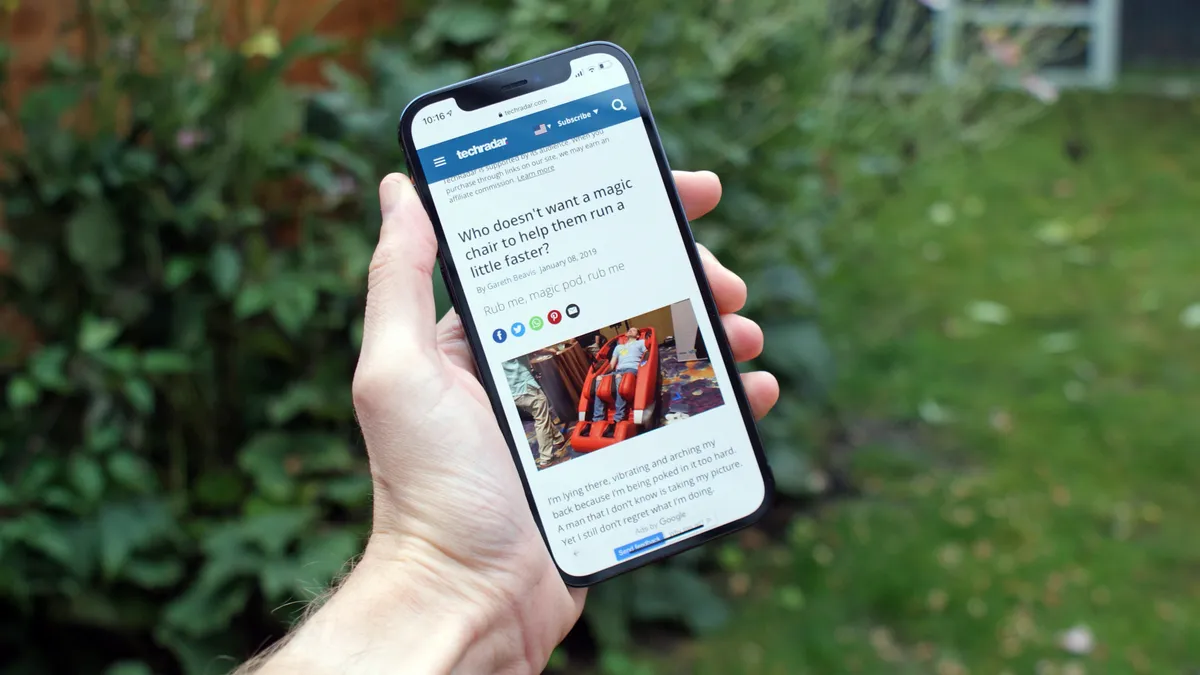
The iPhone 12 Pro has, essentially, the same OLED screen technology as the iPhone 11 Pro. The big change is to the screen size, which increases from 5.8-inch to 6.1-inch without adding to the size of the iPhone 12 Pro's chassis compared to the previous model.
It's now the same size as the display on the iPhone 12, which is surprising. We'd have expected Apple to do more to differentiate between those two models, given that they share the same design, and a slightly larger screen would have been a good way to do that.
With OLED technology used here you're getting one of the best screens around; it’s able to display deep blacks, vivid whites and a vast range of colors, especially when you’re viewing HDR footage.
We find that anything packing an explosion always looks good in HDR, as the bright fireballs are clear, while faces or other dark objects nearby are still visible.
That said, we're not entirely convinced that HDR is really needed on a phone – some of the non-HDR Netflix content we watched looked brilliant, but some of the movies on iTunes (which are automatically upgraded to HDR for free) looked a little too dark in parts.
But the iPhone 12 Pro display is one of the best out there, whether you're looking at high-quality photography from Instagram or just want to enjoy your home movies, which can be captured in the high-end Dolby Vision format in 4K, at a buttery-smooth 60 frames per second.
It would have been nice to see 120Hz display technology debut on an iPhone with the Pro and Pro Max. This higher refresh rate makes scrolling around your phone look and feel much more fluid, and considering that a lot of top-end Android phones now have this feature it’s a shame that it's missing from a 2020 Apple model.
iPhone 12 Pro review: 5G
- 5G is a big upgrade - if there's coverage in your area
- Many places don't yet have 5G, and using it is a battery drain

5G has been a tricky feature to review, because some people will find it to be brilliant, and others won't be able to use it fully, if at all.
If you buy any of the new iPhone range, you're getting 5G connectivity as standard, and that's an excellent thing. Apple is smuggling the next-gen connectivity tech into your next phone, whether you want it or not.
When it works as it can, it’s game-changing. Downloading a 110MB audio book took us just 30 seconds, and where our 4G phone couldn't connect to Spotify thanks to network congestion in the middle of a city, we were able to instantly connect and start streaming over 5G on the iPhone 12 Pro (on EE in London, UK).
5G might seem flashy, and it's hard not to be dazzled by promises of speeds of 200Mbps on the go, but it's actually a really useful and robust technology. It'll allow you to connect seamlessly to the internet in crowded environments – if you've ever tried to browse the web at a sports event, or upload a photo while at a concert, you'll appreciate being able to do those things with ease over a 5G connection.
At least, that's the theory. The issue here is that while the iPhone 12 Pro can connect to a huge variety of different 5G networks, including mmWave in the US with Verizon, these networks haven't fully rolled out yet in many locations.
We had to switch towns to try out 5G speeds, and while they're great to have when you can access them, if you don't have 5G in your home, or reliably on your commute, then it's currently not worth getting a 5G phone just for that tech. But it will be pretty much everywhere one day – and the data plans will become cheaper too, so your iPhone 12 Pro will become more useful as time goes on.
Just don't go thinking that right now, 5G is going to change your life. It's an expensive luxury that, as you'll see later on, comes at the cost of battery life – but when it works, it is next-generation stuff.
iPhone 12 Pro review: MagSafe
- Lets you magnetically attach accessories
- The selection of MagSafe accessories is limited

We've observed many times how Apple rarely invents a new technology – more often it just takes existing tech and puts its own stamp on it it (and then the world seems to think that Apple did in fact invent it).
That's the case with MagSafe, a set of magnets under the casing on the back of the iPhone 12 Pro. It’s named after the magnetic power adaptor supplied with older-generation MacBooks: this safe magnet (wait… we just got the name) would snap out if you snagged the power lead, rather than pulling your laptop onto the floor.
The new MagSafe works a little differently, ensuring a very firm hold when you snap on an accessory. Currently, these accessories are limited to cases, a charger and a wallet add-on. MagSafe accessories can also communicate what they actually are to your iPhone, which has a number of benefits.
With the MagSafe charger, for example, the magnets align the phone right in the center of the charging pad, and because the iPhone 12 Pro knows it's a compatible charger, it’ll juice up your phone with twice the wireless power of the previous model.
Returning to our point about Apple putting its own stamp on existing tech, many smartphone fans will remember the magnetic accessories for the Essential Phone, or the snap-on Moto Mods range. These were the trail-blazers for clip-on accessories, and – especially in the case of the Moto Mods, which have now been discontinued, and can be found on sale on Motorola’s website– we lamented the fact that they were never more of a success.
Actually, that's unfair. The Moto Mods program unleashed so many cool ideas: clip-on smart speakers, high-end cameras, even a projector. While Motorola couldn't generate the scale to make its system viable, Apple certainly can, and in a few months we could be up to our eyes in third-party MagSafe accessories.
But, as with 5G, this feels like a feature for the future, rather than one to be excited about right now. Currently, buying an iPhone 12 Pro so that you can enjoy the benefits of MagSafe will only make sense if you also invest in a wireless charger, which costs $39 / £59 / AU$89, and one of the newer (and slightly more expensive) cases that have a MagSafe ‘passthrough’ so you can leave the cover on and still wirelessly charge. (For us, that’s a game-changer, and will encourage users to leave a protective case on, rather than eventually giving up and leaving it off after having to remove it for the hundredth time in order to wirelessly charge their phone).
Using MagSafe is really cool when you feel the charger snap into place – it's like lobbing the Apple Watch 6 onto its charging pad, but with much stronger magnets. But we’d recommend waiting a while to see what new accessories appear – if the ecosystem really flourishes, it’ll become a great reason to make the upgrade.
iPhone 12 Pro review: camera
- Three 12MP cameras on the back
- Wide, ultrawide and telephoto lenses

The iPhone 12 Pro camera array consists of three distinct snappers: there’s a regular 'wide' option, an ultra-wide sensor, and the telephoto 2x zoom for getting closer to your subjects (which also makes the iPhone 12 Pro's portrait mode more efficient).
There's a fourth sensor here: the iPhone 12 Pro and Pro Max come with a LiDAR scanner, which makes it easier for the iPhone to work out what it's looking at. While that sounds like you'll be able to scan whole rooms and rearrange them virtually in an instance (and in fairness, that capability is available right now, it's just that, basically, no apps are using it well), it's actually more useful for detecting people's faces in low light, enabling the camera to auto-focus speedily.
In good lighting, we didn't notice the cameras focusing appreciably faster thanks to the LiDAR sensor, but when it comes to Night Mode portraits (which we'll get to in a moment) it really was a useful feature.

The other big change on the iPhone 12 Pro and Pro Max, cameras-wise, is the introduction of the ProRAW file format. If you want to know more about this, then check out our Cameras Editor Mark Wilson's excellent explainer on it.
Basically, it's similar to the raw format that many photographers use, which preserves all the image information captured by the sensor to give you greater flexibility when editing. However, if you don’t know how to take advantage of this extra information by processing your raw images, they can look flat and dull compared to JPEGs, which are process in-camera, or in your phone.
Apple's ProRAW bridges the gap, as images are computationally improved by the phone's software, but you're still able to edit and enhance them in your favorite photo editing app, or directly from within Photos itself apparently.
We say 'apparently' as ProRAW wasn't available when the iPhone 12 Pro first launched, instead being added later as a software update. As it wasn't ready when the bulk of this review was being written, we haven't fully tested it yet.


While the iPhone 12 Pro cameras don't seem to be that much of an upgrade from the 2019 11 Pro range, with the same 12MP sensors on all three, the big news is that you can now use Night Mode with all of them, rather than just the main camera.
Night Mode was a really impressive feature when it landed on the iPhone 11, and it can dramatically brighten any photo – even ones taken in almost pitch-black conditions, as long as you're able to hold the phone still for 1-15 seconds (depending on how dark it is).
It's truly impressive when you see the results, as it can literally turn night into day (on your phone’s screen). However, if there's any shake in your hand while you're capturing a shot it can quickly become a blurry mess, especially when you're using the zoom or ultra-wide cameras.
The primary wide camera on the iPhone 12 has been upgraded for better low-light performance – thanks to a wider f/1.6 aperture it does make the average indoor photo at night that little bit brighter, as well as giving the Night Mode function a brighter start image to work from.


Night Mode has been extended to the front camera too, so you can capture better-looking selfies in darker conditions. You can also use portrait mode in the dark, with the Retina Flash (where the screen illuminates to brighten your face) slowly dimming to capture the moment.
This is one area where the iPhone 12 Pro has a clear advantage over the iPhone 12: the additional LiDAR sensor allows you to take clear, in-focus Night Mode portraits, where the iPhone 12 simply can't take in enough light to apply accurate background blur effects.


The selfie camera, in general, is a step up from previous years – it's got nearly every feature that the rear sensors are offering, with things like Smart HDR 3 for better image processing, Dolby Vision video recording and Deep Fusion image enhancement too. However, we still see annoying thing like strands of hair being blurred as part of the background, and sometimes a soft 'halo' effect around subjects.
One of the big features that Apple is touting for the iPhone 12 Pro and Pro Max is the ability to record, edit and watch Dolby Vision content in 4K at 60 frames per second, such is the enormous grunt of the iPhone 12 Pro.
As we're not seasoned filmmakers, this is something that's a little hard to test with confidence, but the image stabilization, even when we were running, is something to behold; and the results were vibrant, and looked far more realistic when shot at 4K and 60 frames per second, to the extent that they appeared almost too true to life.
iPhone 12 Pro review: specs and performance
- Powerful A14 Bionic chipset
- 6GB of RAM and up to 512GB of storage

As the iPhone has been one of the most powerful smartphones in the world for a while now, it almost feels redundant talking about the grunt of the iPhone 12 Pro. However, given that many will be buying it for this reason, it's worth diving into.
The phone is powered by the A14 Bionic chipset, and appears to come with 6GB of RAM (according to our diagnostics) to allow for maximum capability when doing things like the aforementioned video editing on the fly.
This is more than enough power to get through pretty much any task, although it does feel like the iPhone 12 takes a small while to process photos to get them fully sharp and looking great as part of the Deep Fusion optimization.
However, let's not beat around the bush: the iPhone 12 Pro was the most powerful smartphone we've ever tested at the time of launch, thrashing the competition when it comes to raw power. It's still surprisingly potent.
Whether most people will be able to get the most out of that power is another question, but if you know that you'll need a phone that can withstand the most demanding of apps, this is the one to go for (although, curiously, we didn't see any difference in performance between the iPhone 12 and iPhone 12 Pro, despite the latter packing 6GB of RAM, compared to 4GB - and that usually confers a big power boost).
There's also the improved storage to talk about: the iPhone 12 Pro starts at 128GB capacity, and goes up to 512GB for the most expensive option.
This feels like one of the most compelling reasons to spend a little more to buy the 12 Pro – where the iPhone 12 costs $799 / £799 / AU$1349, that's only for the 64GB model, and moving up to 128GB is pretty much essential if, for example, you're going to be recording a lot of high-resolution video files.
iPhone 12 Pro review: software
- Ships with iOS 14
- Updated to iOS 15
We won't dwell on the software, as like all remotely recent iPhones this runs the latest version of iOS, which at the time of writing is iOS 15.
That's several small updates on from the iOS 14 software that the phone launched with, and these tweaks have added things like Apple Fitness Plus, which gives subscribers access to a range of workout videos, ProRaw, which we've detailed in the camera section, App Tracking Transparency, new emojis, and more.
iOS 15 has also added FaceTime improvements, SharePlay, better notifications, a redesigned Safari, and quite a lot more.
iPhone 12 Pro review: battery life
- Can last 48 hours with light use
- Life is more middling with mixed or moderate use
- 5G drains it faster
The battery life of the iPhone 12 and 12 Pro is something of a mystery, insofar as we're hearing reports (currently unconfirmed) that the latest iPhones have smaller batteries than the previous generation.
That would add up, as surprisingly the iPhone 12 Pro is confirmed by Apple to last one hour less for video playback compared to the 11 Pro from 2019.
In terms of overall battery life, we noticed that with light use (as in not using the phone much during the day for browsing and playing games, just photography and listening to music via Spotify) we could easily make it to midnight with more than half the battery remaining, and the phone can actually make it through 48 hours before desperately needing a charge.
However, don't let that fool you into thinking that the iPhone 12 Pro battery life is excellent – it's not. It's just that when spending most of their time on standby, the iPhone 12 range are super-efficient – so if you're spending more time at home connected to lovely, stable Wi-Fi you might be very pleased to discover that you don't need to constantly worry about battery levels.
But when you're out and about, it can be more of a mixed bag. Especially when we were using the phone for web browsing, playing games, or generally keeping the screen fired up when going in and out of 5G signal (a common occurrence while the networks are still being rolled out), battery life was much 'slippier'.

When things are quiet in the office or at home, the iPhone 12 Pro won't be drawing much power at all; but when you're moving, expect to lose between 10-15% per hour, even if you're not using the phone constantly (and more if you're playing an intensive, connected game or browsing the web, for instance).
That's not as good as some iPhones, like the iPhone 11 or iPhone XR, and certainly not at the same level as many Android phones – but we'd call it 'acceptable'.
In our testing benchmarks, there's also a clear drop in battery life when using 5G networks compared to 4G, which means one of the big new features of the iPhone 12 Pro comes with something of a drawback. You'll get 15-20% less battery life if using 5G signal only on the iPhone 12 Pro, which is likely why Apple has added in a smart data mode that slows 5G speeds to 4G levels if 5G isn't needed.
One thing to remember: if you've not got an old Lightning cable and charging block lying around, you're going to need to go out and buy a fast charging block, as the iPhone 12 Pro doesn't come with one in the box.
That's not the end of the world, as they're reduced in price and you genuinely will get a much more rapid charging experience. However, the need to pay an extra $19 / £19 / AU$29 feels a bit galling, especially when you've paid so much for the iPhone 12 Pro.
iPhone 12 Pro review: verdict

At first glance, the iPhone 12 Pro is a tough sell over the main iPhone 12. The phones look identical, and a glance at the spec sheet shows them to be similar on the inside too. However, there are some key areas that impressed us more: the iPhone 12 Pro colors are lovely to look at, with the Pacific Blue one of the nicer shades we've seen on a phone.
Scratch the surface and you'll actually see a more compelling phone. The telephoto zoom is quite useful – arguably more so than the ultra-wide sensor. The LiDAR scanner, while still in its infancy as technology for an iPhone, is already proving to be helpful when shooting in low light, and there's that issue of storage too – starting at 128GB is far more palatable than 64GB for the modern smartphone user.
If you're thinking you'll need that extra bit of RAM, or just want to make sure you've got one of the best phones Apple has put out, then you may well feel it's worth paying that bit extra. If you want even more than that, you may prefer the iPhone 12 Pro Max.