
The Realme 9 Pro+ is meant to take on the new Xiaomi 11 series and the OnePlus Nord series of mid-range smartphones. So, what's new about the Realme 9 Pro+, and is it worth the premium over the Realme 9 Pro?
Realme 9 Pro+ price in India
The Realme 9 Pro+ is available in three variants. There's a base variant with 6GB of RAM and 128GB of storage, priced at Rs. 24,999 in India. The second variant has 8GB of RAM and 128GB of storage, and is priced at Rs. 26,999. The top-of-the-line option with 8GB of RAM and 256GB of storage is priced at Rs. 28,999. I received the top-end version for this review.
Going by the launch prices of the Realme 9 Pro+, there seems to be an overlap with Realme's own GT Master Edition (Review), which starts at Rs. 25,999. This phone offers slightly better core specifications such as a 120Hz refresh-rate display, but lacks the superior primary camera sensor and optical image stabilisation (OIS) offered by the new Realme 9 Pro+. It's great to have more options, but this does nothing to make the lineup less confusing for buyers. Your choice will ultimately boil down to what you prioritise more, a better camera or display.
Can Realme 9 Pro and 9 Pro+ win their respective segments? We discuss this on Orbital, the Gadgets 360 podcast. Orbital is available on Spotify, Gaana, JioSaavn, Google Podcasts, Apple Podcasts, Amazon Music and wherever you get your podcasts.
Realme 9 Pro+ design
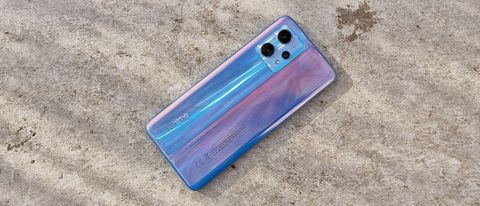
The Realme 9 Pro+ seems to have caught up with the new fad of colour-changing smartphones rather quickly. This phone is available in three finishes: Midnight Black, Aurora Green, and Sunrise Blue. Of these, only the Sunrise Blue finish changes colour when exposed to sunlight, just like the Vivo V23 Pro (Review).

The rear panel of the Sunrise Blue finish switches from blue to maroon when exposed to sunlight
Realme's version of the same colour-changing process enables the 9 Pro+ to switch from a glossy sky-blue colour indoors to a shade of maroon under sunlight. I didn't find this as appealing as Vivo's gold-to-green transition on the V23 Pro. The overall look doesn't feel very premium either, mainly because of the fingerprint-prone rear glass panel.
This colour-changing bit aside, the Realme 9 Pro+'s design looks like that of any Realme smartphone. It has a polycarbonate frame with flat sides sandwiched between two sheets of glass. The phone is quite slim, measuring just 7.99mm, and it feels comfortable for one-handed use mainly because of its low 184g weight.

The Realme 9 Pro+ has an in-display fingerprint reader, and is also capable of measuring heart rate
The display is flat and has a hole-punch front-facing selfie camera. There's an in-display fingerprint reader and you can also measure your heart rate, which according to Realme is still an experimental feature. This is only usable if enabled in the Realme Lab section of the Settings app. One design detail I did not like was the noticeably thick chin below the display.
Realme 9 Pro+ specifications and software
Realme has gone with the MediaTek Dimensity 920 SoC, which is also found in the recently launched Xiaomi 11i series. This SoC runs at a maximum clock speed of 2.5GHz and is manufactured using a 6nm fabrication process. The phone supports several 5G bands along with dual-5G standby. It also has Wi-Fi 6, Bluetooth 5.2, and the usual satellite navigation systems. The device is powered by a 4,500mAh battery which can be charged quickly using the 60W charger that comes in the box.
The new Realme 9 Pro and 9 Pro+ are some of the first phones to run the Realme UI 3.0 software, which is based on Android 12. There are tonnes of preinstalled third-party apps that can be uninstalled and some Realme-branded ones that cannot be.
Realme UI 3.0 is not as heavily customised as Vivo's Funtouch OS, for example, and is more similar to stock Android. This makes it gel well with the new Material You design of Android 12. While certain features of Android 12 such as the powerful new search get the boot, the privacy dashboard and related features have made it. Unlike Vivo or Samsung, Realme's selection of UI widgets has always been quite limited, so the new Android 12 widgets do not feel out of place on the home screen.

The Realme 9 Pro+ comes with Android 12 and there are some new customisation options
Realme UI 3.0 still looks like Realme's take on Android. Its design and fonts appear quite consistent, until you jump into the Privacy Dashboard in the Settings, where you are greeted with a stock Material You UI that clearly looks very different. According to Realme, certain sections of Android 12 (Privacy Dashboard, Permissions Manager, Digital Wellbeing) are required to have the stock appearance, regardless of the custom skin applied to the OS. I also came across some minor theming glitches such as greyed-out text in collapsed notifications in the pull-down tray when using dark mode.
The Realme 9 Pro+ has a dynamic theming system similar what you'd get with Android 12 running on a Pixel device. This feature picks colours from the wallpaper you choose and then applies them to interface elements such as the notification tray toggles, Settings menu icons, and so on. You can also pick the colours you want from your wallpaper and let the theme engine create a complementary palette from them. However, the implementation is a bit buggy. The revamped Android 12 widgets from Google apps and the Google keyboard don't seem to change colour along with the rest of the UI, as they do on Pixel devices. In short, a bit of fine-tuning is still needed.
Realme 9 Pro+ performance
The Realme 9 Pro+ features a 6.4-inch AMOLED display with Corning Gorilla Glass 5 protecting it. Colours looked a bit oversaturated at the default ‘Vivid' colour setting, and I preferred the toned-down ‘Natural' mode. Sunlight legibility was quite good, and text and images looked sharp. Unfortunately, the Netflix app was not available because I had a pre-production unit, but I was able to test streaming video using Amazon Prime, which worked well. The phone had some trouble representing accurate colours when viewing HDR shows, and they were pale and muted; nothing like how they should have looked. Realme has said that a fix for this issue should be rolled out soon. Standard definition content appeared just fine, with deep blacks. The experience came together well thanks to this phone's stereo speakers, which sounded loud and clear.

The Realme 9 Pro+ has 6.4-inch AMOLED display with a 90Hz maximum refresh rate
The display refresh rate can only switch between 60Hz and 90Hz. Even when set to the latter, it stays at 60Hz when playing games but goes to 90Hz when browsing through the phone's interface. Opening the YouTube app also made the screen's refresh rate lock at 60Hz, even though the video playing on screen was running at 30fps. This means that the display's optimum refresh rate is only available when interacting with the phone's software, and not when playing games, as of now.
When it came to benchmarks, the Realme 9 Pro+ did not disappoint, and performed on par with the competition. It scored 5,07,258 points in AnTuTu and 818 and 2,316 points in Geekbench's single- and multi-core tests, respectively. Despite the bloatware, Realme UI 3.0 ran buttery smooth, and the 90Hz refresh rate display made UI interactions feel quite fluid.
Gaming performance was also quite good. The phone ran Call of Duty: Mobile at the default, ‘Medium' graphics and ‘Very High' frame rate without any issues. I didn't notice any drop in performance when the graphics settings were bumped up further. For some reason, Asphalt 9: Legends kept crashing on startup, so I tried Real Racing 3 instead. It worked smoothly without any hiccups.

The Realme 9 Pro+ has three rear-facing cameras
The Realme 9 Pro+ managed an impressive 23 hours and 36 minutes in our HD video loop battery life test. I managed to get a day and half of regular use which involved some gaming and camera usage. This is good for a mid-range device. Charging was also quite fast. The phone charged from zero to 80 percent in 30 minutes and was fully charged in 50 minutes using the bundled 60W charger.
Realme 9 Pro+ cameras
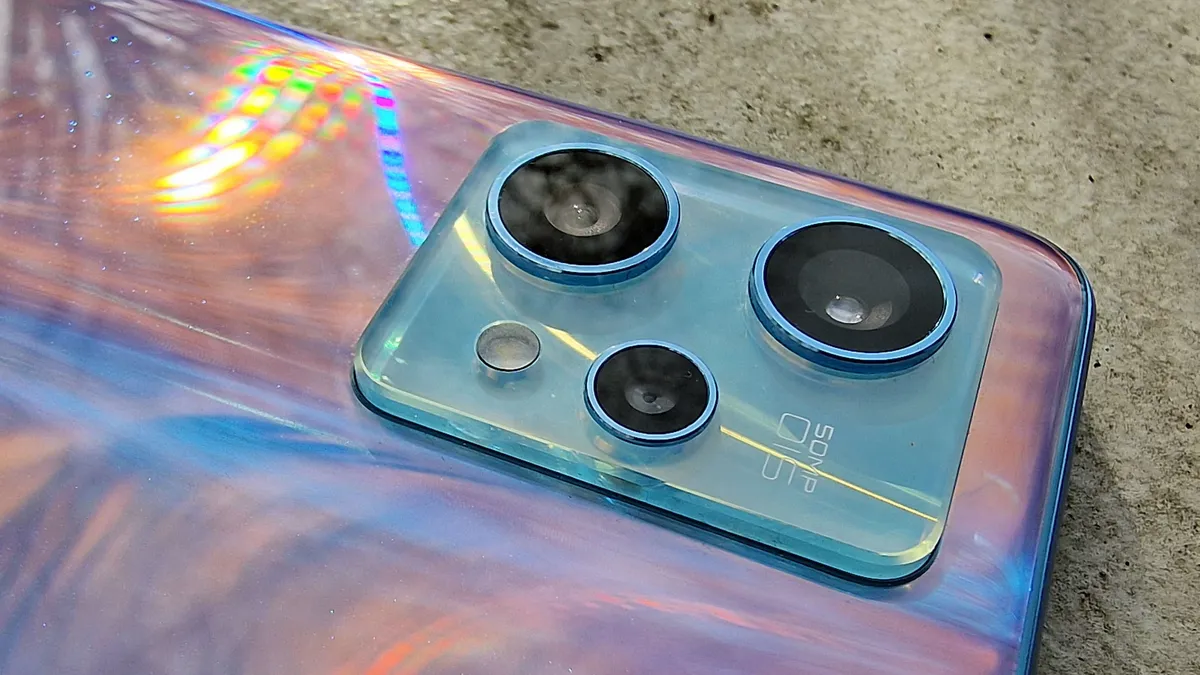
The Realme 9 Pro+ ditches the 108-megapixel camera of its predecessor in favour of a 50-megapixel primary camera, which also happens to have optical image stabilisation (OIS). It's not just any sensor either, but a Sony IMX766, which we've only seen in more expensive phones such as the Oppo Reno 7 Pro (Review) and the OnePlus 9RT (Review) so far. There's also an 8-megapixel ultra-wide angle camera and a 2-megapixel macro camera. Selfie duties are handled by a 16-megapixel front-facing camera.
The camera app is similar to what we've seen on recent Realme phones, but has a few changes. For instance, some of the controls such as the timer for photos and frame rate selector for videos are now moved under the three-dot button menu. As with all smartphones running Android 12, you will also notice a green dot appearing near the status icons to indicate that the camera is being used, which is a privacy protection feature.


Realme 9 Pro+ daylight camera samples. (Tap to see full size)
Daylight photos looked clean and sharp with good dynamic range and details. HDR was a bit aggressive, and colours were a bit oversaturated. I ended up turning the ‘AI' toggle off as it tended to bump the saturation up even further. Portrait photos taken with the front as well as rear cameras came out sharp and quite detailed, with good dynamic range. Edge detection was also quite good.


Realme 9 Pro+ daylight camera samples. Top: Primary camera, bottom: Ultra-wide-angle camera (tap to see full size)
Photos taken with the ultra-wide-angle camera were surprisingly usable. They were not as sharp as ones shot with the primary camera, but had good dynamic range along with minimal barrel distortion thanks to software correction. The macro camera was useful even though the results appeared a bit oversharpened.
In low light, the Realme 9 Pro+ would automatically keep its shutter open for a second longer to gather more light. This was without turning on the AI mode. Images shot in low light, even in Auto mode, came out quite sharp and dynamic range was also good thanks to OIS. Switching to Night mode brought out even more detail.


Realme 9 Pro+ low-light camera samples. Top: Night mode, bottom: Street mode (tap to see full size)
There's a ‘Street' mode in the camera app which automatically sets up the exposure so you can capture things such as light trails. While these features have been present in previous Realme devices (and some from other brands too), I was impressed with how easily the Realme 9 Pro+ allowed me to capture such long-exposure shots without the need to stabilise it or mount it on a tripod.
Videos recorded at 1080p looked fine and were stabilised well, but were not as sharp as I expected. 4K footage (limited to 30fps) showed good detail and sharpness but was quite shaky and looked a bit choppy. The results were similar in low light as well.
Verdict
While the Realme 9 Pro+ and the 9 Pro might seem as though they have overlapping specifications, they clearly belong in different categories, given the brand's hardware choices for both these smartphones.
The Realme 9 Pro is priced starting from Rs. 17,999 offers a 120Hz refresh rate display, a 5,000mAh battery, and a 64-megapixel primary camera, which actually make it seem better than the 9 Pro+ on paper. However, the Realme 9 Pro+ has an AMOLED display that can reproduce deeper blacks, 60W charging support, and a more advanced primary camera sensor plus OIS. So, despite their similar pricing, the audiences for these two phones should be quite different. The Realme 9 Pro will appeal to gamers who want a higher screen refresh rate, while the 9 Pro+ is clearly aimed at those looking to shoot better photos.
As for the competition, the Xiaomi 11i seems to offer the best value at this price point with similar or slightly better hardware. There's also the Xiaomi 11i Hypercharge (Review) which is capable of 120W charging. The OnePlus Nord CE (Review) is another option in this price range, and offers a capable camera plus a clean software experience. As we already know, the OnePlus Nord CE is soon to be replaced by the Nord CE 2.
The Realme 9 Pro+ might not have very aggressive specs, but the company has made some sensible choices in areas that matter. Key among these is the OIS system and flagship-grade sensor in the primary camera, which deliver good performance in daylight as well as low light; something most smartphones in this segment struggle with. The MediaTek Dimensity 920 SoC is a solid performer too. You get Android 12 out of the box and Realme UI 3.0 runs buttery smooth. Battery life is also quite good. All of this makes the 9 Pro+ excellent value for money.
There are two unique features that, it seems, are meant to be the Realme 9 Pro Plus’ selling points. The first is a heart rate monitor built into the fingerprint scanner. This is a nice extra, but if we weren't testing the mobile to review it, we probably wouldn’t have noticed this existed.
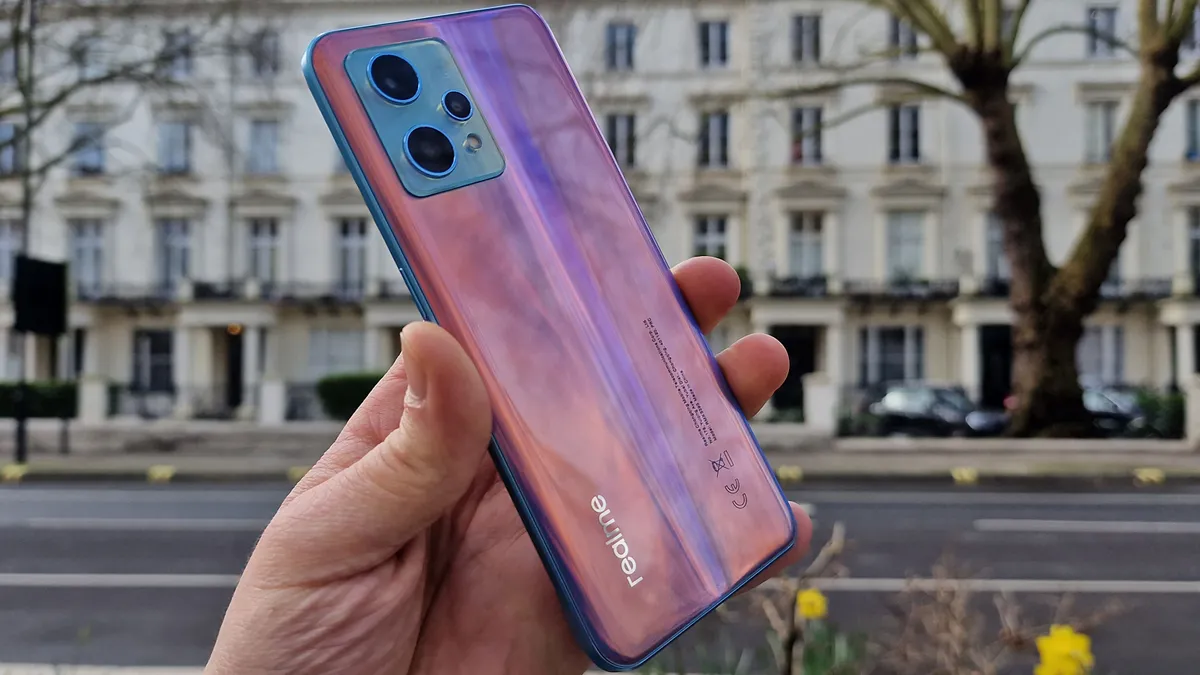
The second selling point truly is something bold and bizarre: the rear of the phone changes color in sunlight, going from a sparkly blue to bright red. We love how weird this is - even if it brings no tangible benefits.
But while you might check out the phone for this eye-catching novelty, you’ll stay for its solid range of features and specs.
The phone’s cameras, charging speed and processing power are all above-average for a phone in this price range. Even the weaker elements, like the display or battery, are still on par with rival phones at this price. As we said, it’s hard to critique this phone.
Particularly impressive is the camera’s capabilities in low-light conditions, which is a type of photography we’ve previously only seen premium phones perform well at. With its 50MP Sony sensor, the Realme captures night shots you’d think were taken on an iPhone.
The Realme 9 Pro Plus does all this without betraying its roots as a low-cost device. Its price is enough to make it a seriously impressive phone for nearly all buyers. In fact, it’s a good enough phone to tempt people who’d otherwise want a much more expensive Samsung Galaxy or Apple iPhone
As you can tell from this breathless two-minute review, the Realme 9 Pro Plus really impressed us. It’s a great start to 2022 from the brand and a benchmark we’ll be comparing all future similarly priced phones to.
Realme 9 Pro Plus price and availability
The Realme 9 Pro Plus costs £349 (roughly $470, AU$660), so it straddles the line between ‘budget’ and ‘mid-range’ phones.
The Realme’s release date is March 4 in the UK. We don’t have availability information for the US and Australia, but that’s not a total surprise. Realme doesn’t sell phones in the States and, while it does sell in Australia, the Realme 8 series didn’t launch there.
That price is, frankly, impressive for a smartphone that looks, feels and runs like this one. Contemporary competitors include the Moto G200 and the Xiaomi Redmi Note 11 Pro which are a tiny bit more expensive.
When we started testing the Realme, we weren’t told the price, and we came to the conclusion that it’d be quite a bit more expensive than it actually is. When we found out the real price, we were shocked - that is to say, this seems like a bargain.
Design
The Realme 9 Pro Plus uses a rear design pattern that’s as novel as it is bizarre. While it doesn’t look that way from the images accompanying this review, trust us, it’s odd.
That’s because of what Realme calls its ‘Light Shift Design’. This isn’t just one of those color-changing backs like quite a few phones have, which flicker between shades as you turn them - no, it’s more like the Vivo V23.
It’s best to compare it to one of those color-changing mugs - when you leave the phone in sunlight, it gradually turns from blue to bright red, something we discovered with shock the first time we brought the device into the sun. After a few minutes out of the sun, it goes back to blue.
This is a cool trick and was great fun to watch the first few times we tried it. But we should point out that the color change requires direct sunlight, not indirect or artificial light, so it only works in particular circumstances. If, like us, you live in the UK, you’ll only get to use this feature about three times per year.
Beyond that eye-catching gimmick, this is your standard Android phone. There’s a USB-C port and 3.5mm headphone jack, with a power button on the right edge and a volume rocker on the left one.
As well as the Light Shift Design version of the phone we tested, there are also black and green versions available.
Display
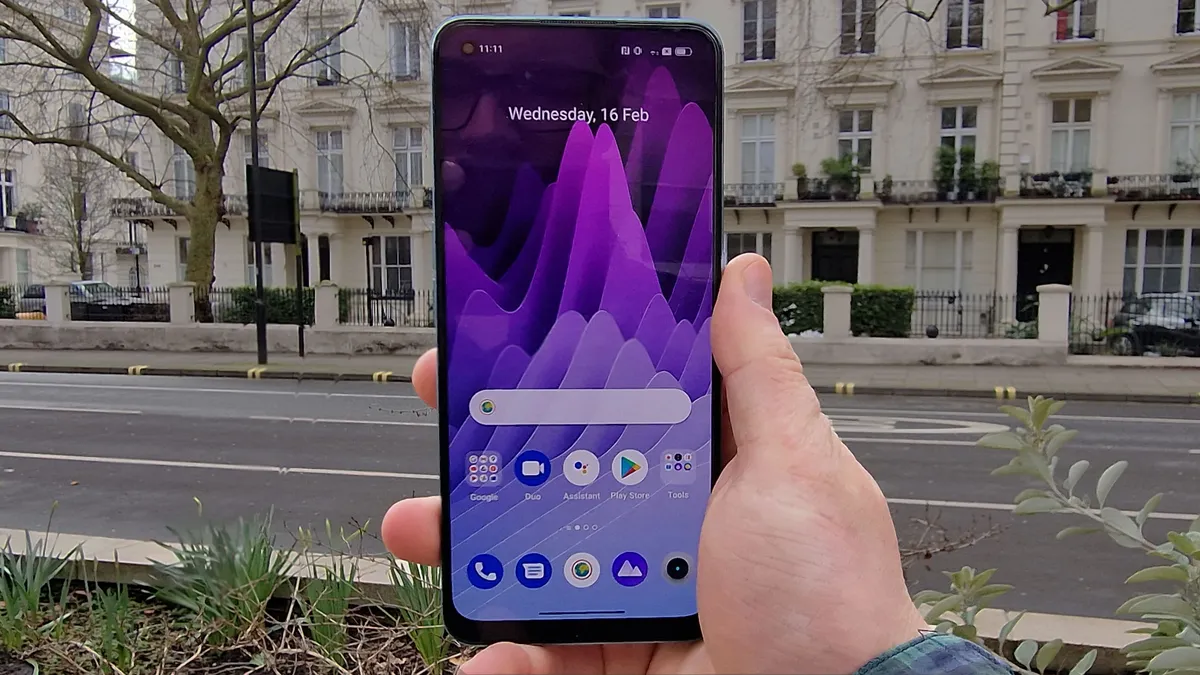
With a 6.43-inch size, the Realme 9 Pro Plus is fairly medium-sized in the grand scheme of Androids, and its resolution of 1080 x 2400 and 90Hz refresh rate are also both par for the course for a phone of this price.
So it’s a perfectly serviceable screen, fine for playing games or streaming videos (most apps only offer at that resolution anyway). It’s fairly colorful too, though we did find the max brightness was a little lower than it could be.
Breaking up this display is a punch hole for the camera cut-out at the top left.
This phone uses an in-display fingerprint sensor, and one of the intriguing features of the phone is the fact that this doubles as a heart rate monitor. It’s a fun addition, which might be useful for people who don’t have a fitness tracker or bespoke tech for the function, though obviously, it’s not as accurate as either of those.

Unfortunately, the function is a little hidden in the phone - we had to search for it in the Settings app - so we’d like to see a home screen widget or better placement for it.
Cameras
There are three rear cameras on the Reamle 9 Pro Plus. Leading the charge is a 50MP main snapper, which is joined by an 8MP ultra-wide and 2MP macro cohort.
We were pleasantly surprised by the photo quality from the cameras Snaps looked bright and bold, with sharp detail and contrast was pronounced, especially on ultra-wide pictures.
The color profile was incredibly similar between standard and wide pictures, avoiding an issue that many multi-camera smartphones have. On the topic of ‘avoided problems’, ultra-wide pictures were barely distorted at all.
Likely thanks to the Sony IMX766 sensor in the main camera, which is fairly large and therefore takes in more light, low-light and night pictures looked great. Shots taken in Night photography mode were full of detail, sharp, and well exposed too, with sources of light in the shot not blowing out the rest of the image.
However, the standard Photo mode was no slouch for this kind of shot either, which meant that even when we didn’t have time to hold the camera still for several seconds (which Night mode requires), we could still capture an adequate shot.

It’s rare for a budget phone to be any good for low-light photography, so we were very pleasantly surprised by the Realme 9 Pro Plus’ performance.
The front-facing camera hits 16MP, and while selfies looked okay, we found they were a little washed-out. Maybe the vibrant pictures taken on the main camera spoiled us, but we would like to have seen more colorful selfies.
Video recording goes up to 4K, which is pretty standard for any modern smartphone, though that’s at 30fps - you can only go up to 60fps if you drop the resolution down to 1080p. Video quality was as good as photography, but we did find that autofocus while recording could be jittery, jumping to re-focus on different objects instead of smoothly gliding between subjects.
A new camera mode we haven’t seen before is Street, which is apparently for Street Photography, with a few different filters available. In practice, it didn’t offer any extra benefits over the standard camera modes and filters. There’s also a tilt-shift mode, something we have seen a few smartphone cameras try before, but we’ve always found that AI software can’t convincingly recreate the complicated camera hardware trick and it was the same here.
The usual crowd of modes is also present including macro, panorama, pro, slo-mo video, document scanning, time-lapse and dual-view video tools.
Camera samples


Performance and specs
The Realme 9 Pro Plus is the second phone we’ve seen with the MediaTek Dimensity 920 chipset - the other was the aforementioned color-changing Vivo V23. This is a mid-range chip that slightly beats Snapdragon alternatives.
When we put the phone through the Geekbench 5 benchmark test, it returned a multi-core score of 2258. That’s better than the Vivo V23, which hit 2079, and puts it on par with the Samsung Galaxy S10 5G, Nubia Z20 and iPhone XR, flagship phones from past years.
For some additional context, contemporary mid-range processors usually hit around 1800, while top-end ones hit the low 3000s or sometimes high 2900s, so the Realme 9 Pro Plus is pretty powerful for its price.
We tested the phone over long gaming bouts and found it performed admirably - titles loaded quickly and were generally able to comfortably run high graphics options. In addition, the phone took a long time to heat up while gaming, likely thanks to new cooling tech Realme has introduced here.

We tested a version of the phone with 8GB RAM, but RAM expansion is on by default - this lets you use storage space to bump up the RAM a little bit and the Realme lets you get up to 5GB extra this way. There was 128GB storage in our review unit.
Since the Dimensity 920 has a 5G modem, you can connect this phone to the top-tier connectivity networks, if you live in an area that offers it.
There are dual stereo speakers on the Realme 9 Pro Plus, which is good for gaming or streaming media as it means it’s harder to accidentally cover the speaker grilles with your hands.
Software
The Realme 9 Pro Plus runs Android 12 with the company’s own Realme UI laid over the top. This is largely a design and theme change, but Realme does bring a fair amount of bloatware with its user interface.
The key selling point of Android 12 is its Material You feature, which lets you change app icons to match your home screen wallpaper, but like most Android 12 forks, this wasn’t available on Realme UI at the time of the 9 Pro Plus’ launch. (However, if you’re reading this review months after it was first published, it’s possible Material You has been brought to the phone.)
As mentioned, bloatware is a bit of a problem here. The Realme 9 Pro Plus comes with Amazon Shopping, Booking.com and LinkedIn already installed. We’ve seen other phone UIs with much more bloatware, so Realme isn’t the worst for this by any means, but it’s still rather irritating.
We found that navigating the phone’s user interface was pretty snappy: there was rarely lagging when we swiped between menus or opened and closed apps.

Battery life
Like the display, the battery life is another aspect of the Realme 9 Pro Plus that’s pretty average for this kind of phone.
There’s a 4,500mAh battery that reliably lasted for a day of use, whether the day consisted of the odd social media here and there or long bouts of mobile gaming and movie streaming. You can really push this phone and rely on it to keep ticking.
We wouldn’t go as far as saying the phone has a two-day battery though, as you’d need to really modulate your behavior to keep it going that long.
Charging speed is fairly impressive for a mid-range phone like this at 60W. Even some flagship phones, like the Samsung Galaxy S22, linger behind that.
At that speed, powering the phone from empty to full should take about half an hour - but given the phone’s battery life, you shouldn’t find yourself at 0% too often.
Should I buy the Realme 9 Pro Plus?
