

Realme has just launched a new generation of its Narzo models, called the Narzo 60 5G and the Narzo 60 Pro 5G. Both smartphones are up for pre-booking and will go on sale on July 15. As is the case with most new launches, the prices of these new models have gone up a bit compared to the Narzo 50 series, but you also get improved specs and features. Today we'll be taking a closer look at what you can expect from the Narzo 60 Pro 5G, in terms of bundled accessories and features.
Realme is one of the few companies still including plenty of kit with its smartphones. The Narzo 60 Pro 5G ships with a TPU case, 80W power adapter, USB cable, SIM eject tool, and some documentation. You also get a screen protector pre-applied on the phone.
The top-tier variant of the Realme Narzo 60 Pro 5G has 12GB of RAM and a colossal 1TB of built-in storage. This is the first time we have ever seen a smartphone in this segment ship with this kind of storage space. This variant is priced at Rs. 29,999. The middle option comes with 12GB of RAM and 256GB of storage and is priced at Rs. 26,999, while the base variant gets you 8GB of RAM and 128GB of storage for Rs. 23,999. The phone comes in a Mars Orange colour featuring a faux-leather back, and a Cosmic Black option with a polycarbonate back. The latter has a very nice metallic texture under the plastic panel and is smooth to the touch.
The display on the Narzo 60 Pro 5G is a big talking point for Realme. It is a 6.7-inch curved-edge AMOLED panel with a 120Hz refresh rate and a full-HD+ resolution. In the short time I have been using this phone, colours seem punchy and brightness is more than adequate. I like that the phone also has a narrow chin so the bezels look even throughout. You get an in-display fingerprint sensor which sits a little too far down on the display for my liking. The phone feels very slick thanks to its narrow frame, the curved edges of the display, and the back panel.

The Realme Narzo 60 Pro 5G has a curved-edge AMOLED display
The rear camera module of the Realme Narzo 60 Pro 5G is sure to grab a lot of attention. The imposing design makes it look like it packs multiple sensors, when in reality it misses out on even a crucial ultra-wide camera. The main camera has a 100-megapixel sensor which is optically stabilised, and it is accompanied by a 2-megapixel portrait camera. Realistically, you get just a single usable camera, which is disappointing. On the front of the phone, there is a 16-megapixel selfie camera.
The Realme Narzo 60 Pro 5G uses the same SoC found in the Realme 11 Pro series, which is the MediaTek Dimensity 7050. You can read more about its performance in our Realme 11 Pro+ 5G review. The Narzo 60 Pro 5G features a 5,000mAh battery with 67W SuperVOOC fast charging, and ships with Realme UI 4.0 software which is based on Android 13. The phone also has stereo speakers but lacks an official IP rating for dust and water resistance.
The Narzo 60 Pro 5G finds itself in a rather awkward situation within Realme's smartphone family. Given the fact that it's basically a twin of the 11 Pro 5G, and the base variants of both models are priced exactly the same, there's only really any incentive to choose the higher-end options, with more RAM and storage. You could also choose the Realme 11 Pro+ 5G which starts at Rs. 27,999 and has ultra-wide and macro cameras, a much higher resolution main camera, and quicker charging. We should have more clarity on which phone you should choose after we're done reviewing the Narzo 60 Pro 5G, so don't miss that.
Verdict

The Realme Narzo 60 impresses with its AMOLED display and 90Hz refresh rate. The MediaTek Dimensity 6020 SoC also delivers decent performance. While camera capabilities and charging speeds are not exceptional, the phone is a reliable choice for budget users and daily activities.
Design and display

In terms of its overall appearance, the phone has a flat design on the front and back, a departure from the curved looks sported by the Pro model in this series. What is still the same is the aesthetics of the back panel. Everything from the vegan leather material to a large circular camera housing is a mirror image of the Narzo 60 Pro. The branding at the bottom is in a new font and I think it looks quite trendy. As for the frame, it uses polished plastic with light gold accents that go well with the brightly-coloured Mars Orange variant that I have received. The phone’s dimensions are nothing out of the ordinary with nearly 8mm thickness and a weight of 182g. The USB Type-C port, a speaker grille, and 3.5mm headphone jack are all at the bottom.

As for the viewing experience on offer, the Narzo 60 has an AMOLED panel with Corning Gorilla Glass 5 protection, 90Hz refresh rate, and FHD+ resolution. The bezels around the display are a bit thick for my liking but the overall visual quality is to my liking. With similar devices in play, the Narzo 60 certainly does kick things up a notch with punchy colours and deep blacks thanks to its screen’s OLED tech. However, if you are looking for HD capabilities, then you will have to look elsewhere as the phone only packs in WideVine L3 certification for HD viewing. Finally, the brightness levels are decent enough for usage in overcast outdoor conditions but can take a slight hit if it’s too sunny outside.
Cameras
The primary sensor on the device is a 64MP shooter while the secondary is a 2MP portrait lens. I would’ve really liked an ultra-wide sensor to make the image-taking experience more utilitarian. Even so, the primary camera does a decent job of capturing details and prefers a more vibrant colour output. Close-up shots automatically blur out the background and I am happy to report that the lens nails the focus around the subject. Exposure-wise, the image gets some fine-tuning after the post-processing work is done and I also like how reliable the manual slider is. Of course, the images snapped are pixel-binned to 16MP and as usual, you have the option to snap full-resolution 64MP images. A secondary benefit of this is that the phone can basically take lossless 2X zoom shots with a single tap by cropping into the main sensor’s resolution.
Apart from that there are no other sensors of note. The 2MP portrait lens is fine for bokeh images although I have seen computational-based tricks for the same which deliver, if not better, the same results. The low light performance left me wanting a bit more, mainly with the sensor’s lack of focus in night conditions. Even after multiple taps on the viewfinder to adjust it, the final image generally came out soft. This is even true when using the dedicated Night mode. Only with a AEF lock can the desired results come close to acceptable and I find that to be a bit cumbersome. Selfies are fine with the exception of lighting behind my face which, at times, can be overblown. Overall, daylight photography on the device is worthy of a second look but low-light imagery needs some work.
Performance and software
The Realme Narzo 60 packs in the Dimensity 6020 SoC by MediaTek, which works silently beneath its sleek exterior. While the device’s main selling point isn’t its performance, it pleasantly surprises by effortlessly handling day-to-day tasks. Although benchmark numbers may not accurately reflect the Narzo 60’s true processing prowess, it flawlessly manages my usual social media browsing, WhatsApp messaging, and YouTube streaming workflow. With up to 8GB of LPDDR4X RAM and 256GB of internal storage, the Narzo 60 offers ample space, and through virtual swap, it dedicates up to 8GB to RAM, resulting in a total of 16GB. In summary, the Narzo 60 may not tower over its competitors, but its speed leaves no room for doubts about performance. The same can be said for its gaming capabilities, as it handles popular titles like BGMI smoothly, maintaining a respectable 45fps with High graphics settings.

Authentication on the phone is done via an in-display fingerprint sensor, slightly uncommon at its price point. It works well enough and the registry process is also not a hassle. The chipset is 5G capable and the device can connect with all popular NSA and SA 5G bands on offer in the country. There’s just a single speaker setup at the bottom of the device which is not that great. Thankfully a 3.5mm headphone jack beside it allows for wired audio setup, absent on most phones these days.

Software-wise the phone has Realme UI 4.0, which is based on Android 13. While not too different from its previous iteration and also intuitive and customisable, the skin can be perceived as cluttered due to the abundance of Realme apps on the home screen and app drawer. Furthermore, the presence of a persistent window that pops up with every app download, suggesting similar or trending apps, can be intrusive. Nevertheless, the overall user-friendliness of RealmeUI 4.0 prevails and despite its few niggles, is relatively easy to navigate through.
Battery

As for the battery life on offer, the Narzo 60 has a standard 5,000mAh cell housed inside and it supports 33W fast charging. A typical day of usage will drain about 60-70 percent of the battery making the handset an easy one-day device. On the flip side, compared to some other offerings in the same price bracket, the Narzo 60 takes a substantial time to juice up. A full charge, starting from 0 percent, can easily take upwards of 2.5 hours.
Final verdict

The Realme Narzo 60 offers a host of impressive specs for its price, and the most noteworthy amongst them is the AMOLED display with 90Hz refresh rate. Design-wise the phone stands out easily while the MediaTek Dimensity 6020 SoC ensures smooth performance. Other features include an in-display fingerprint sensor, 5G support, and Android 13 out of the box. The phone’s optical capabilities can leave you wanting as will the charging speeds. However, for most users on a budget, the Narzo 60 will serve as a useful tool for daily activities.
Editor’s rating: 3.5 / 5
Reasons to buy:
- With its leather back and lightweight design, the Realme Narzo 60 is easily the best-looking phone in its segment
- A 5,000mAh cell makes the device long-lasting
- The 90Hz AMOLED panel is very vibrant and rich in colours
Reasons not to buy:
- An ultra-wide camera is lacking
- The phone is not the best performer in terms of low-light images
- 30W charging speeds take a lot of time to juice up the battery
I am reviewing the Realme Narzo 60 Pro, the mightier of the two. So, who should buy this? And what can you expect? I will tell you in my review.
Price & Availability
Realme Narzo 60 Pro 5G is available in 3 variants. There is a variant with 8GB of RAM and 128GB of internal storage priced at ₹23,999. Then there is a variant with 12GB of RAM and 256GB of internal storage priced at ₹26,999. Finally there is a variant with 12GB of RAM and 1TB of internal storage priced at ₹29,999.
Design
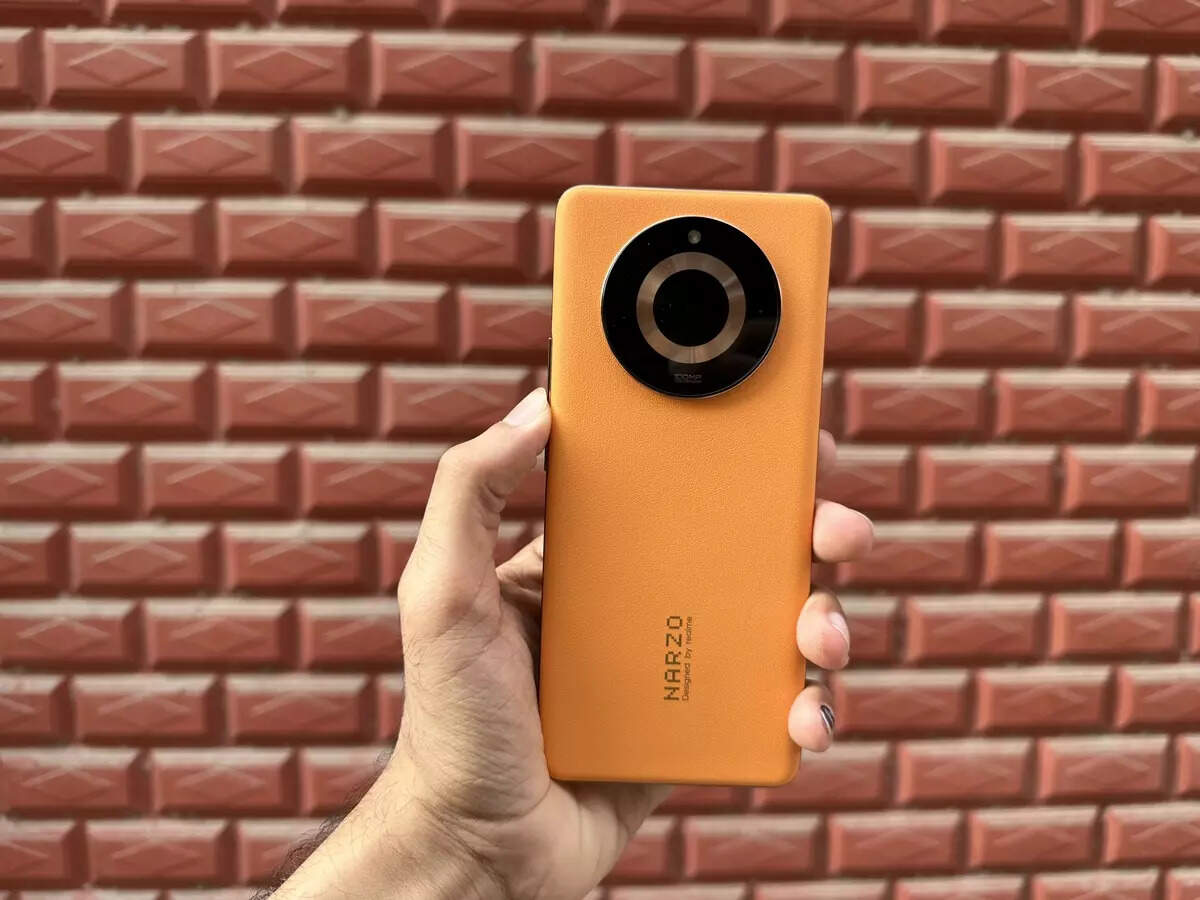
Realme Narzo 60 Pro’s design is identical to what we have seen on the Realme 11 series. Especially on the back, with a round camera module and a vegan leather back. There are certain differences though, which can be noticed. Like the Narzo misses out on the stitching on the leather back, like we see on the 11 series. Another is of course Narzo is a tad bit heavier.
I wish Realme didn’t add the Narzo branding on the back, since for me it breaks the beauty of the device. The martian color with me looks very elegant and is a darker orange color that will grow on you. There are other color options like sunrise which is white and cosmic night, which is black. If you want to play it safe you can go with the latter.
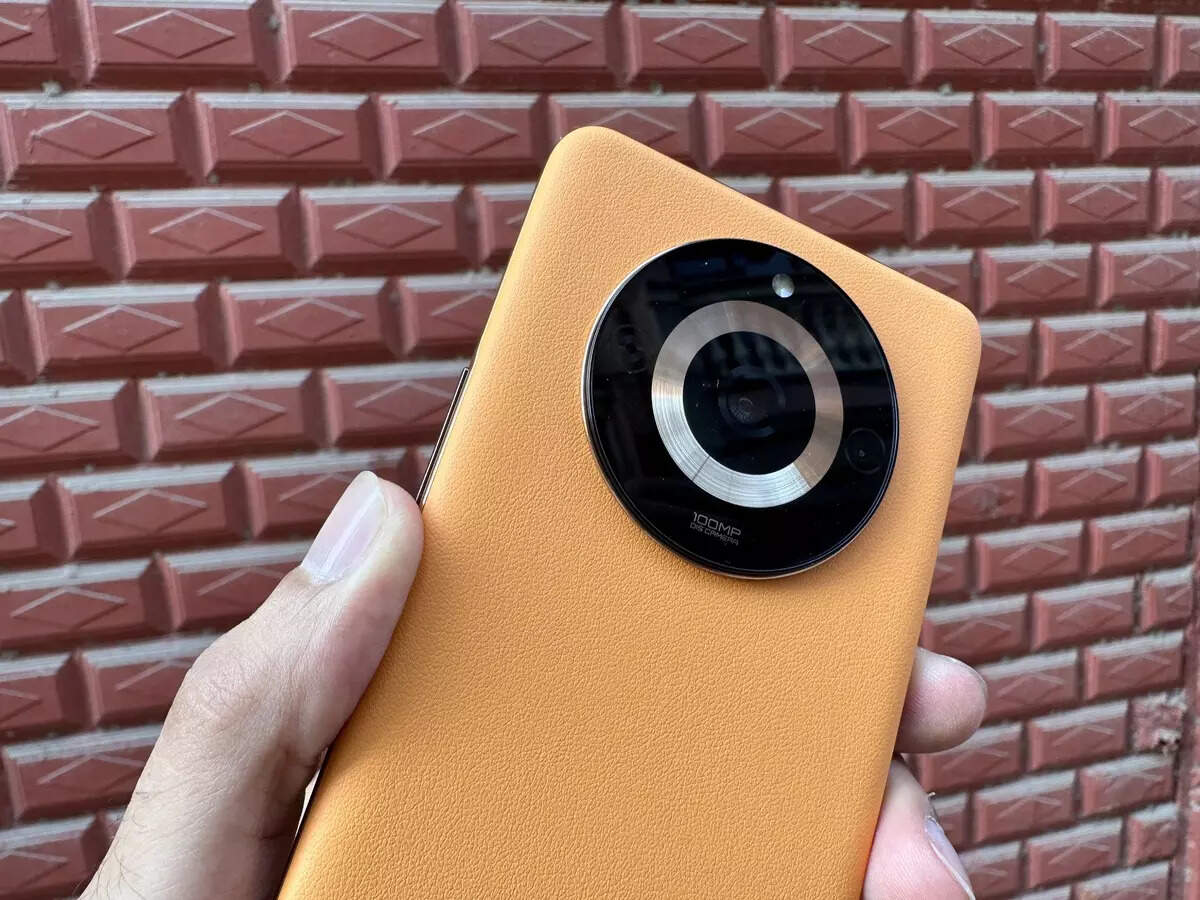
Moving on, the back also adds to the grip, since it is textured. Providing a premium in-hand feel, the smartphone has a character to it, which is favorable. The curved edges look elegant and the golden trim adds to the experience as well.
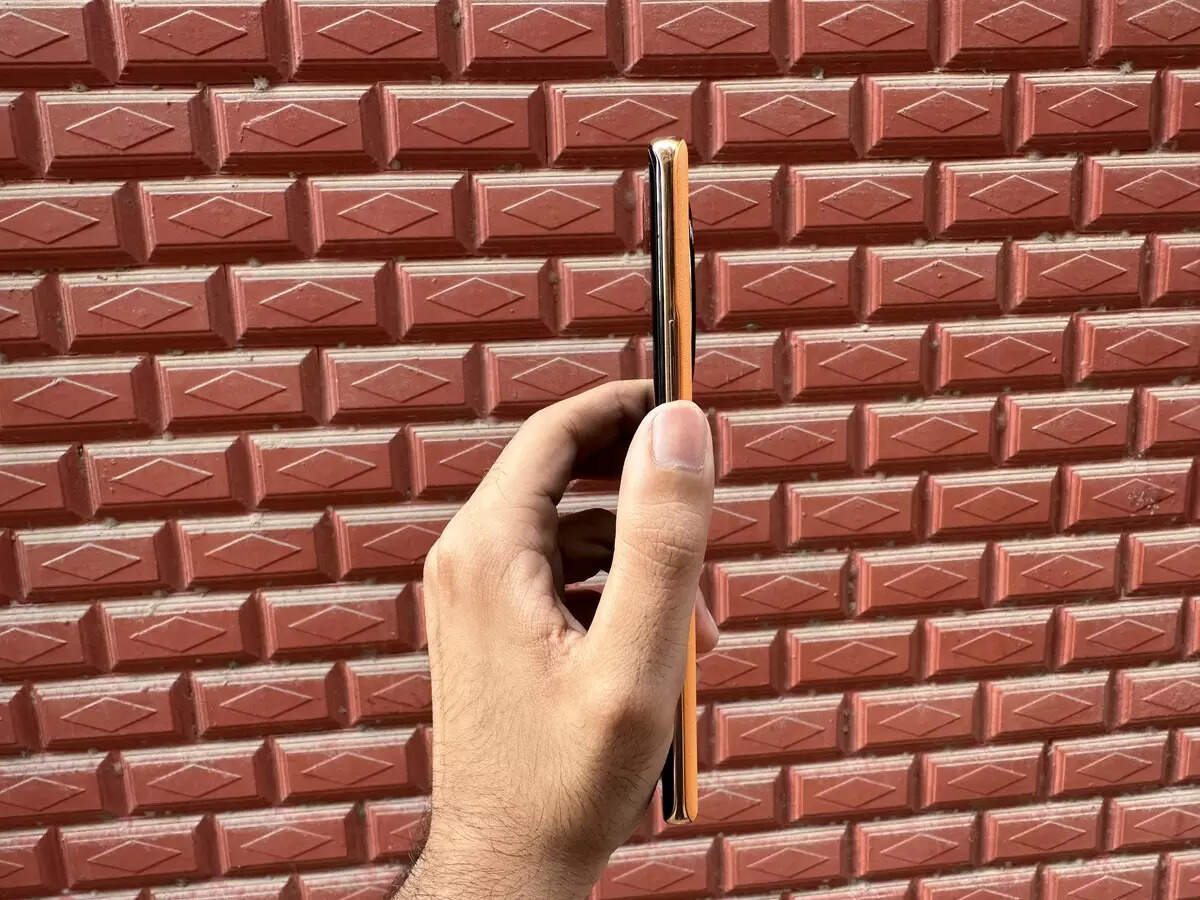
Located on the right side of the device are the power button and the volume rockers, providing a tactile experience with a satisfying clicky feedback. Although the Narzo 60 Pro exhibits a sturdy build, it lacks an official IP rating, which would have added to its reliability credentials. While I acknowledge that this omission is typical in its price segment, having such certification would have served as a valuable assurance.
Moving to the bottom of the device, you will find the SIM tray, the USB Type-C charging port, and the speaker grill. The 10 Pro+ 5G supports two micro SIMs through this port. We don’t have a 3.5mm headphone jack here, which shouldn’t be surprising.
However, there is a feature making a return in this segment which I would have liked to see here - IR blaster. Nord 3 has one and it comes in handy more often than not. I am certain we will be seeing it on more devices in the future.
Display
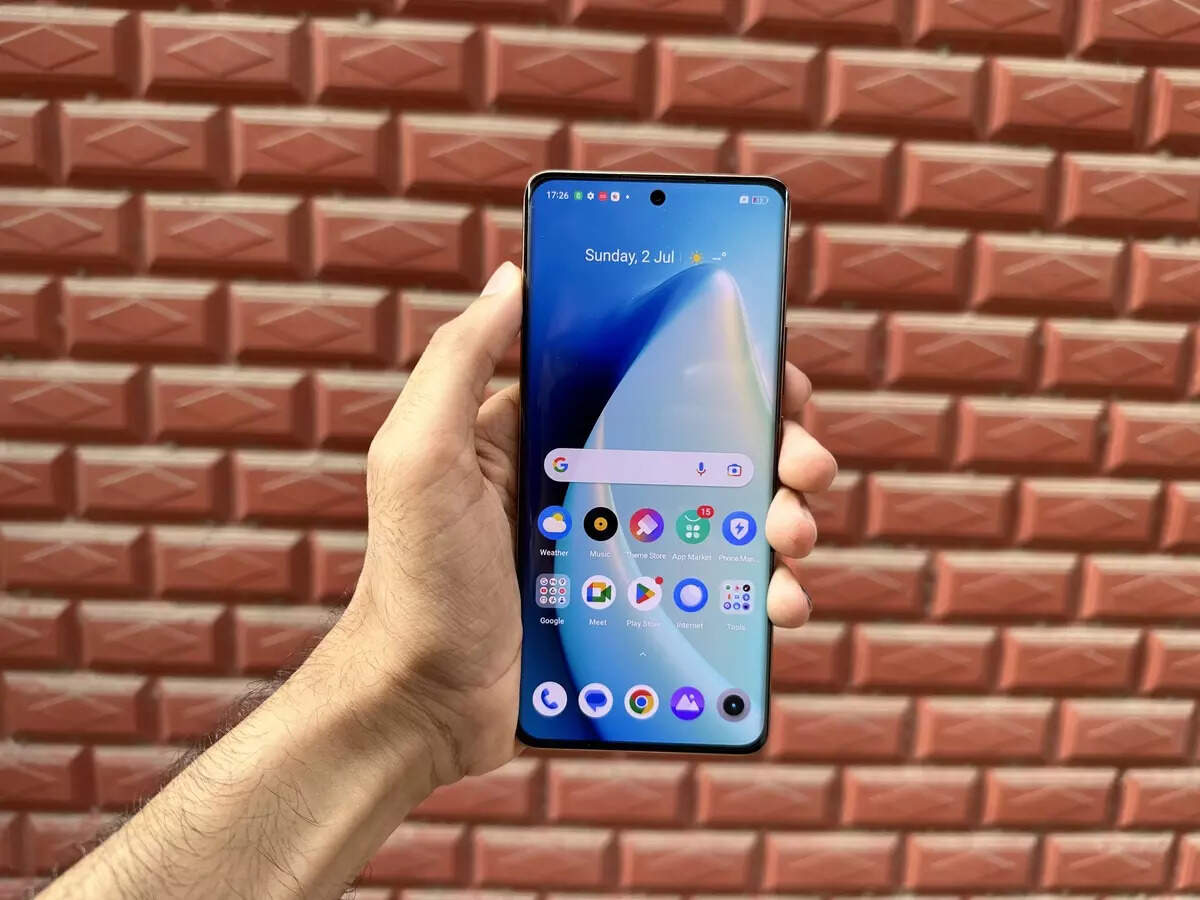
The Narzo 60 Pro boasts a 6.7-inch curved OLED display with a maximum refresh rate of 120Hz. Before delving into the display quality, I want to acknowledge Realme's commitment to uniform bezels, which adds visual appeal to their devices. The bezels on the Narzo 60 Pro maintain this consistency, contributing to an overall cohesive design.
Now, let's discuss the in-hand feel and usability of the screen. Like most curved displays, there is a potential for accidental touches, but Realme has made efforts to address this issue. While some mistouches may still occur, they are relatively limited. Personally, I encountered some challenges while adjusting the volume, occasionally triggering unintended actions. However, with time, I familiarized myself with the device's handling, although it can be initially frustrating.
Apart from that, the touch response on the display is robust, enhanced by the haptic feedback, resulting in an interactive experience. The screen offers a maximum refresh rate of 120Hz, with a standard option of 60Hz. Additionally, an auto-select feature adjusts the refresh rate based on the displayed content. Throughout my testing, I preferred the maximum 120Hz refresh rate as it provided smoother and more consistent visuals. In contrast, the auto-select mode exhibited noticeable stutters when switching between different refresh rates for various applications.
Before discussing the viewing experience, let's address the in-display sensor. The Narzo 60 Pro utilizes an optical sensor, which introduces a slight delay before the device unlocks. Moreover, I found the sensor placement inconvenient, located right above the chin at the bottom of the device. This issue has been raised by me with previous Realme devices as well. While seemingly minor, it becomes inconvenient when attempting to unlock the device while holding multiple items. A workaround for this inconvenience is setting up face unlock for a quicker unlocking process.
Regarding the viewing experience, the Narzo 60 Pro meets expectations. The panel exhibits optimal brightness and respectable color accuracy. Images appear sharp, and in some cases, the results were even better than those observed on the OnePlus Nord 3, a direct competitor to this device. I enjoyed watching content on the 60 Pro over the weekend, and I have no complaints thus far. The black levels on the screen are also satisfactory, although I did notice some minor lag in HDR content. Nevertheless, this shouldn't significantly affect your viewing experience. Additionally, the phone supports HD content on streaming applications, ensuring the best possible quality for your entertainment.
The audio setup on the Narzo 60 Pro completes its package. With a dual-speaker setup and Dolby Atmos support, the device delivers impressive volume. The speakers also feature an ultra-volume mode, which, while not recommended for continuous usage, shouldn't cause any issues with occasional bursts of loud sound.
Before concluding this section, I advise turning off the device's auto-brightness feature. Despite giving it multiple chances, I found it unreliable in adjusting to the correct brightness level. Ultimately, I resorted to manually setting the brightness according to my preferences.
Additionally, the device offers a standard always-on display, which can be customized. While useful and legible, it manages to remain unobtrusive, avoiding unnecessary distractions.
Software
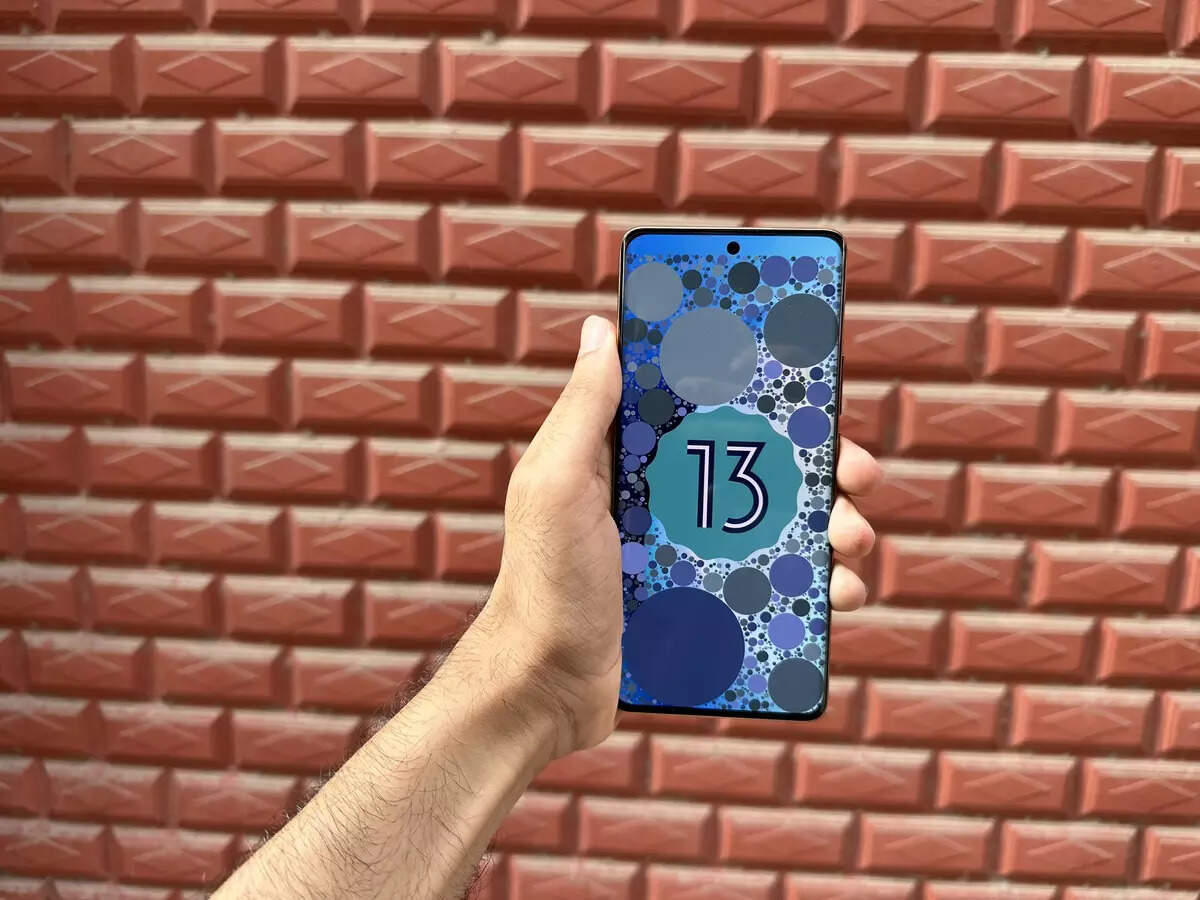
We also get hot apps and hot apps suggestions on the UI, which again I am not a big fan of. I tried to be rational and find something suitable there, but its definitely not for me.
Setting aside these preinstalled apps, Realme UI runs smoothly on the Narzo 60 Pro, offering enjoyable user interactions with its intriguing animation style for actions like uninstallation and switching between tabs. It's worth noting that this review is based on a brand new unit, and performance may vary over time.
Having previously used the Realme C55 5G, I found the execution of the UI on the Narzo 60 Pro to be significantly improved, despite the similarities between the two devices.
I am also surprised that we don’t have the mini-capsule here, which is a feature Realme is providing on the C55. It’s a software play on pill shaped notifications. I would have liked to see it here, as well.
Realme provides ample customization options, taking advantage of Android 13 features and their own custom skin. In addition to the standard choices like Dark mode, users can delve into extensive customization. You have the freedom to select a design that suits your taste and explore various theme colors to personalize your device to your liking.
Performance
Realme Narzo 60 Pro is equipped with the Mediatek Dimensity 7050 5G SOC, which delivered satisfactory performance across various tasks during my testing. While it doesn't offer anything extraordinary, it provides enough power to ensure a wholesome experience, making it a worthwhile investment.
Let's start by discussing the gaming experience on the Narzo 60 Pro. As a fan of COD: Mobile, I played the game for up to an hour every night. The smartphone ran the game smoothly on high graphics and max frame rate settings. However, there were some compromises, with noticeable frame drops when pushed to the maximum. Switching to medium graphics resulted in a respectable performance consistently.
A similar situation occurred with Genshin Impact, where the smartphone struggled with rendering the open-world environment, causing noticeable lag. However, by adjusting the graphic settings to low, the issue was resolved.
This performance level was expected from the Narzo 60 Pro, but what impressed me was its thermal management. Even during intense gaming sessions, the device didn't experience any unusual heating scenarios. While the back did get slightly warm after 45 minutes of gaming, it never became uncomfortable to hold.
The 60 Pro performs well in heavy tasks, but it truly shines when handling everyday tasks such as emails, web scrolling, and social media. These activities also allowed me to appreciate the display further, as it provided a delightful scrolling experience.
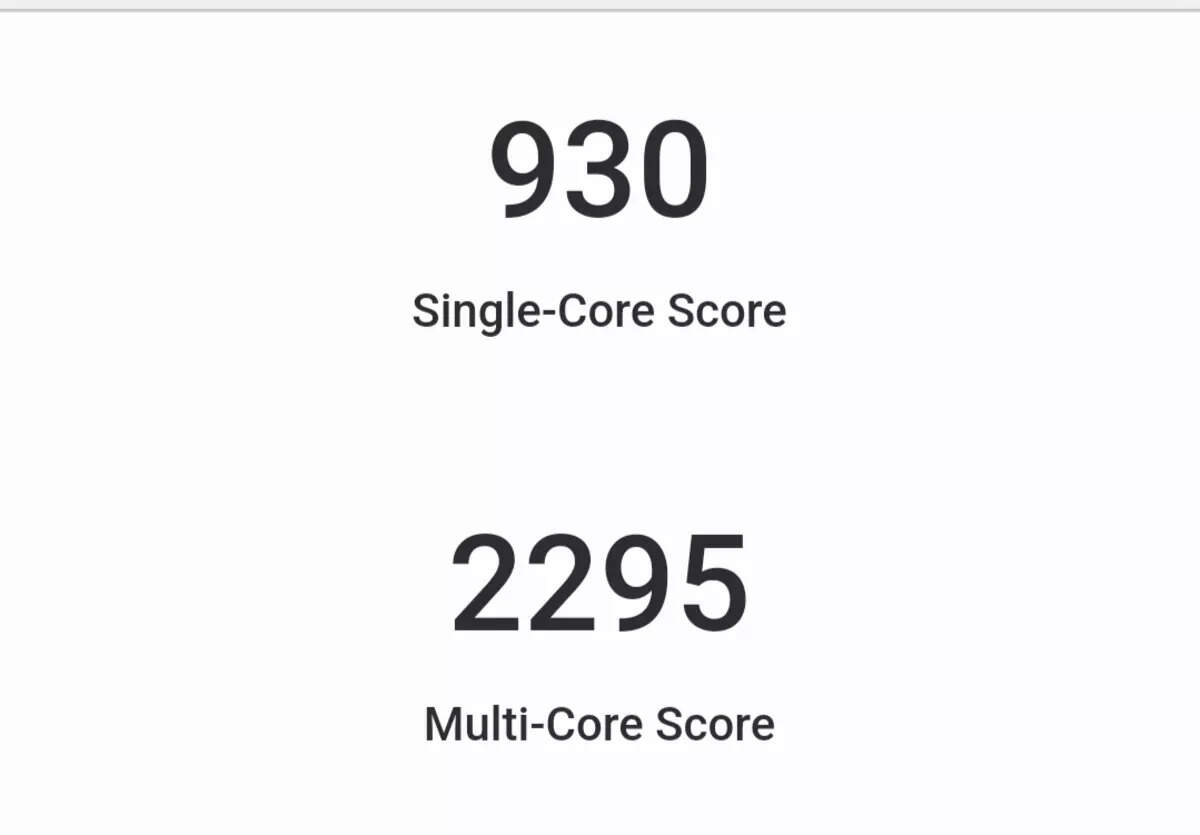
In terms of benchmark scores, I ran a Geekbench test on the smartphone, yielding respectable results with a single-core score of 930 and a multi-core score of 2295.
The storage on my review unit is an impressive 1TB, which means that users like me won't need to worry about filling it for at least two years. If you are someone who doesn't mind spending a little extra for peace of mind, I would recommend opting for this option.
The battery performance on the device met my expectations. On average, I achieved a screen-on-time (SoT) of up to 5 hours. The SoT dropped to 5 hours on weekends when I engaged in longer gaming sessions and watched content. However, on lighter usage days, the SoT could extend to 7 hours thanks to the 5000mAh battery.
The phone also supports 67W SUPERVOOC charging, which is enabled with the included adapter. The charging speeds are favorable, and with data turned on and apps running in the background, you can expect a 0-100% charge in approximately 50 minutes.
Camera
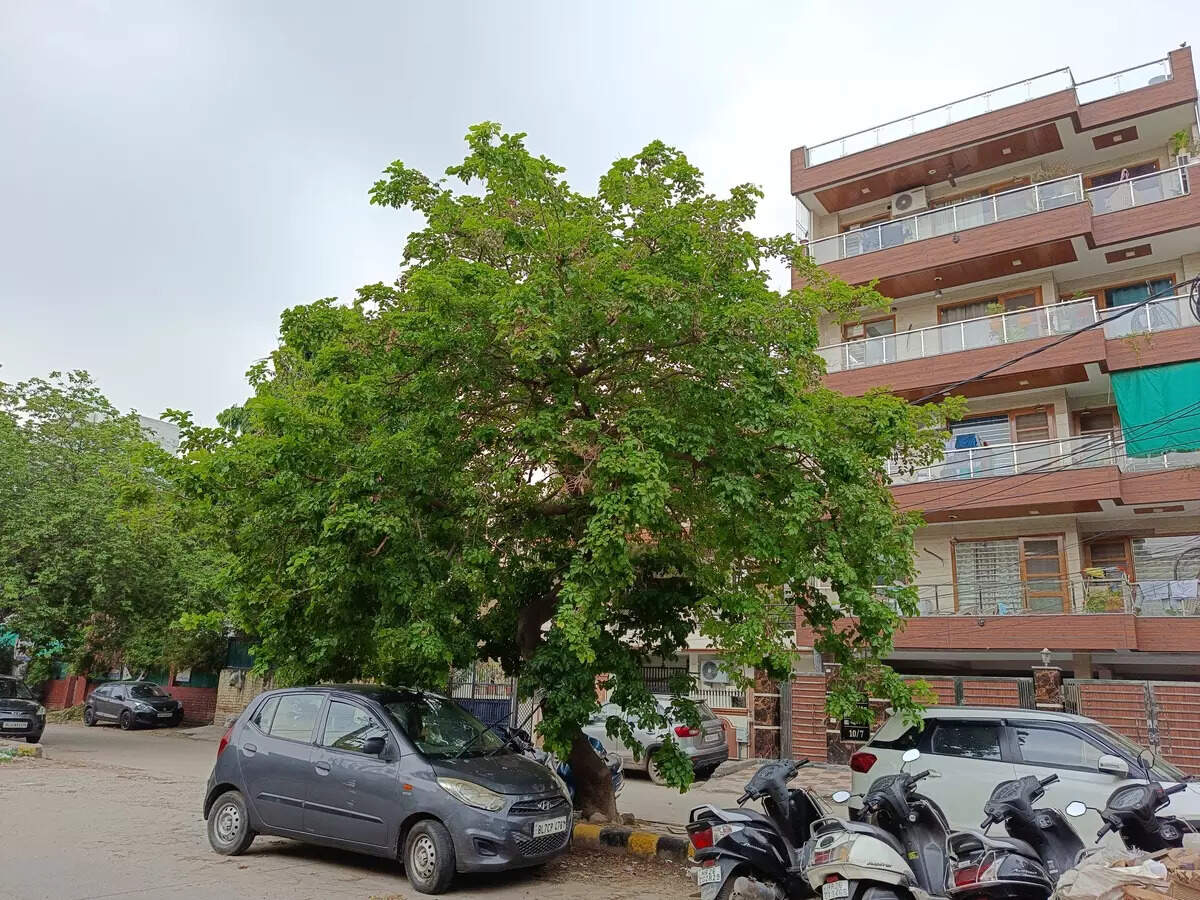
The smartphone is equipped with a 100 MP primary camera and a 2 MP portrait sensor.

Starting with the positives, the primary 100 MP camera on the Narzo 60 Pro is surprisingly impressive. It captures sharp images with a significant amount of detail. In natural lighting conditions, you can expect great pictures with accurate color reproduction. The camera also does a good job of capturing skin tones.
The camera features AI scene enhancement, which proves useful when taking indoor pictures. However, I noticed visible burnouts in outdoor images when this feature is enabled. AI enhancement also tends to produce oversaturated images at times, so keep that in mind.

Low-light performance on the smartphone's camera can be underwhelming. While the low-light mode improves the scene, the images often lack detail.
Despite the slight dip in low-light performance, the primary camera excels in video recording. It can capture 4K videos at 60fps with accurate colors and quick focus shifts. If you're a content creator, you'll be impressed by the video output, and the in-built microphone records crisp audio.

Moving on to the 2 MP portrait sensor, it does a decent job of detecting edges and applying bokeh effects. However, I believe adding an ultra-wide sensor would have added more value compared to the one provided. An ultra-wide sensor would have helped in capturing better frames, considering that bokeh effects can be achieved digitally.

The selfie camera is a 16 MP shooter, but it exhibits a noticeable lag when capturing action in the frame. This might be negligible for the average user who may not notice it.
For its main task, photography, the selfie camera does a decent job. However, the skin tones appear off, which can be a drawback. The AI portrait selfie feature is available as well, allowing you to tweak various aspects of your face. It's not a feature I'm personally a fan of, but if you enjoy fine-tuning your appearance, you can have fun with it.
Video performance from the selfie camera suffers from similar issues, including color tone correction and subpar autofocus speed. If you plan to shoot videos, I recommend sticking to the primary camera. You won't be disappointed.
Verdict
Realme Narzo 60 Pro provides performance and aesthetics in a single package, something the buyers should resonate to. However, if you can’t compromise on software and camera you can check out OnePlus Nord 3.