

Vivo X200 Pro Design: Getting better like fine wineColours: Titanium Grey and Cosmos Black
Ingress Protection: IP68 + IP69
Weight: 228 grams (Titanium Grey)
Design-wise, the X200 Pro looks like a sibling of the X100 Pro, and there's nothing wrong with it. After all, the X200 Pro is an extension but packs more features under its belt. Those unfamiliar with the premium Android smartphone landscape lately should know that we are seeing phones with over 200 grams of weight, which was almost a decade ago categorised as a very heavy device for everyday use. Yes, folks, we are in this era where heavy is the new norm. But, smartphone manufacturers have done a good job with aesthetics. Vivo, especially here, has done a fabulous job, as the X200 Pro is more comfortable to hold than the iPhone 16 Pro Max or Samsung Galaxy S24 Ultra.

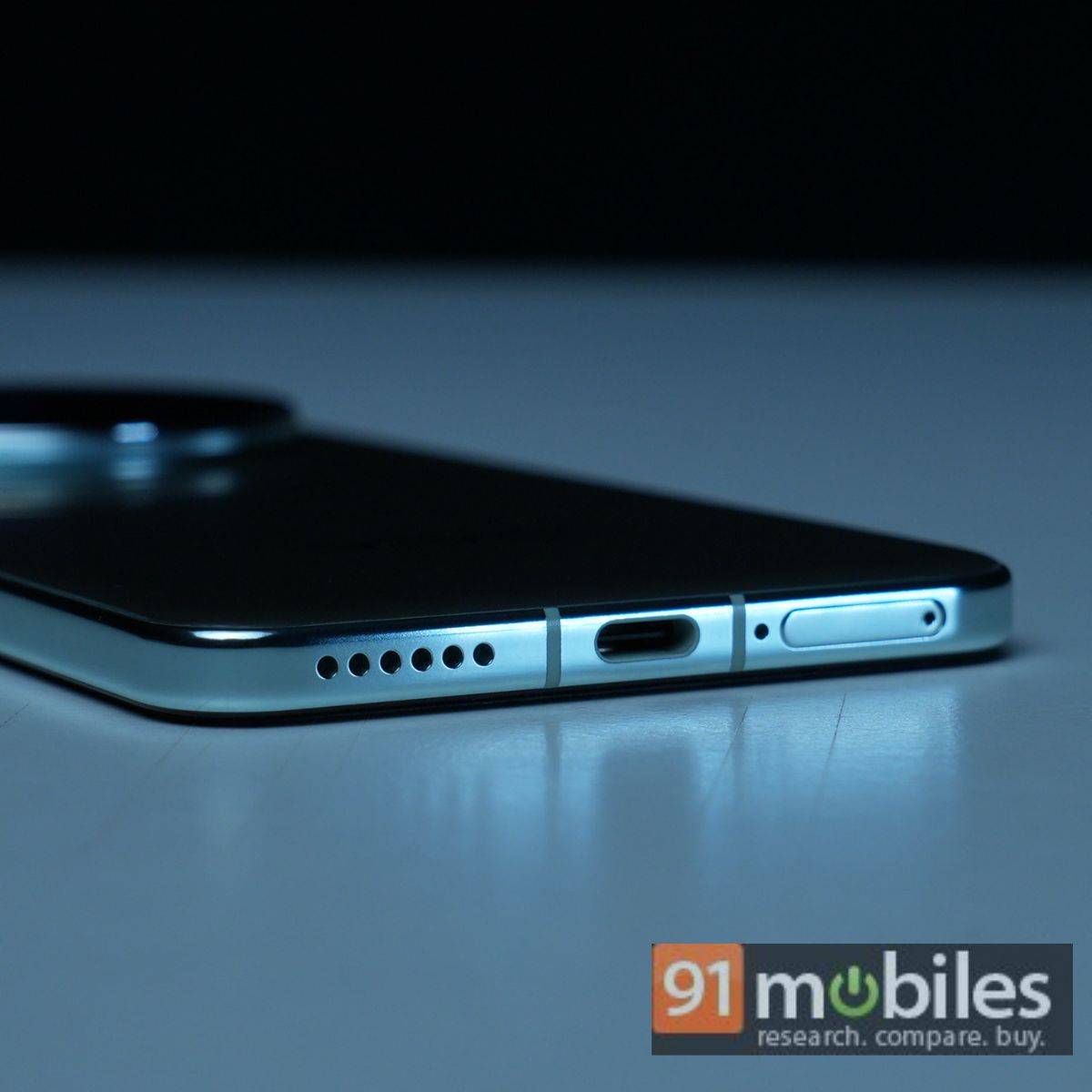
It comes with IP68 and IP69 water and dust resistance
The first time you hold the X200 Pro, you feel the heftiness (228 grams Titanium Grey), but thanks to its aesthetic design, it should not take long before you get used to it. If you have medium-sized palms, the X200 Pro is convenient to use with just one hand. Though, there's a slight learning curve where you get familiarised with the size. I love the boxier design of the X200 Pro when compared to the more curved look of the X100 Pro.

It weighs 228 grams (Titanium Gray)
The screen largely dominates the front panel, and the punch-hole selfie camera is a minimum distraction. The bezels around the display are slim. The side frame uses a brushed process that feels solid in the hands, creates strong lines, and offers a metallic look. The back panel has a large circular camera housing and, of course, a bigger one than the last time (on X100 Pro). The sunburst pattern ring encircling the lens range adds to the elegant design language. The back cover material is glass fibre, which feels elegant to the hands and is smudge-free.

It supports dual nano SIMs
This year, Vivo introduced a new colour shade with the X200 Pro - Titanium Grey, which looks stunning. There's the regular Cosmos Black for those who love black. The X200 Pro has an IP68 and IP69 ingress protection rating for additional peace of mind.
Overall, the Vivo X200 Pro ticks all the right boxes when it comes to what a premium smartphone should pack in. The design is sophisticated, and thanks to the large circular ring with Zeiss branding, Vivo phones can be recognised in a sea of similar-looking phones.

You have to appreciate the attention to detail; for example, the sunburst pattern at the back encircling the camera looks outstanding
Vivo X200 Pro Display: Top-notchDisplay size: 6.78-inch AMOLED
Resolution: 1260x2800 pixels, 452PPI pixel density
Refresh rate and peak brightness: Up to 120Hz and 4500nits
The X200 Pro packs the same size LTPO screen as its predecessor, the X100 Pro. However, a big bump has been given to the peak brightness, which now stands at 4500nits on the X200 Pro versus 3000nits on the X100 Pro. Under direct sunlight, the display is brighter than the iPhone 16 Pro Max and Pixel 9 Pro.

The 6.78-inch LTPO display offers up to 4500nits peak brightness
For everyday use, the display panel on the X200 Pro is excellent as it offers punchy colours and is bright in various lighting conditions. The text appears sharp. It is one of the best displays from the house of Vivo for multimedia consumption, be it streaming or gaming.
At the India launch, Vivo claimed that the X200 Pro packs Armor Glass at the front, which is tough and 11 times more drop-resistant than the X100 Pro. Vivo has gone with a quad-curved display on the X200 Pro, adding a premium touch to the device. Adding another feather to the hat, the X200 Pro also gets 2160Hz PWM dimming, which can reduce flicker and eye strain for comfortable viewing, be it day or night. The X200 Pro also packs a host of Smart Eye Protection features to reduce display fatigue, a neat addition.

It offers 452PPI pixel density and supports up to 120Hz refresh rate
Vivo X200 Pro Camera: A master choicePrimary: 50-megapixel Sony LYT818 sensor with f/1.57 aperture, PDAF and OIS
Ultrawide: 50-megapixel sensor with f/2.0 aperture and 119-degree field of view
Telephoto: 200-megapixel with PDAF and OIS
Selfie: 32-megapixel (fixed focus)
The X200 Pro packs some of the biggest upgrades over the X100 Pro in the camera department. The telephoto camera is a big leap for the X200 Pro as it brings almost the same setup as the X100 Ultra, which never made it to India. At the India launch, Vivo claimed this is the first phone with a 200-megapixel Zeiss APO telephoto camera. It also gets the Zeiss T* Coating. So, here we have the Ultra, at least in spirit (no pun intended). It uses a Samsung ISOCELL HP9 sensor.
On the other hand, at first glance at the camera spec sheet, the primary camera looks like a downgrade, especially considering that the X100 Pro came with a 1-inch sensor. The X200 Pro packs a 1/1.28-inch sensor, which is slightly smaller, and I will talk about the quality in detail in a bit. Lastly, the ultrawide is a 50-megapixel sensor with autofocus, and the 32-megapixel selfie camera is carried over from the X100 Pro.

The rear camera features the Zeiss T* Coating
The camera UI is familiar; however, Vivo has tried its best to simplify things for users. We've got an all-new Landscape mode combining multiple modes, including Night, Supermoon, Long Exposure, Astro, Landscape, Panorama, and time-lapse. Vivo has baked in a street photography mode for those who love it, which can be triggered by double pressing the volume down button. It is a handy mode for taking quick shots, and now, let's dive straight into the camera quality.
Daylight pictures come out well with the primary camera on the X200 Pro. There are plenty of details, accurate colours, and the dynamic range is on point. This was mostly consistent across different lighting conditions where the phone kept noise levels in check. Below are some samples from my testing time, and you can see that the X200 Pro doesn't look like a downgrade from the X100 Pro, at least in real-world usage.


Daylight samples from the primary camera (tap image to expand)
The telephoto camera is the X200 Pro's biggest strength. The quality that you get at 3.7x is fantastic across lighting conditions. The telephoto sensor is capable and can help with portraits, too. Amazing details all around, and the colours are excellent. In portrait shots, exceptional quality is captured. Vivo has also packed in a Stage mode, which basically takes advantage of the 3.7x lens. So, next time, if you're heading to a concert and have the X200 Pro, you know what lens to choose from. Portrait mode is on par with rivals and delivers some stunning results with well-emphasised subjects with good depth estimation. The street photography mode brings the necessary features in quick launch mode and offers two modes - texture colour and classic black and white.


Samples from the 200-megapixel Telephoto sensor (tap image to expand)

Stage Mode (tap image to expand)

The telephoto camera can click some fantastic portraits (tap image to expand)
Low-light samples are equally interesting and have no scope for complaints. The detail levels are excellent, and noise levels are minimal. The colour rendering is fantastic, and I don't think many Android flagships can match this level of quality in extremely low-light scenarios.


Low-light samples (tap image to expand)
Macro photos come out well, too, and below are two examples that should blow you away. The amount of details X200 Pro can capture is unbelievable.

Macro sample (tap image to expand)
The ultrawide camera is the only one that falters a bit. The details and colours are good, but the results are not as good as those of the primary or telephoto camera.

Ultrawide sample (tap image to expand)

Ultrawide sample (tap image to expand)
Jumping to zoom results, the X200 Pro can outshine some of the more expensive phones. Excellent zoom performance by far; you can see yourself in the samples below.

10x Zoom sample (tap image to expand)
Selfies are decent, but it seems like it got entirely missed during X200 Pro R&D. It is picked from the X100 Pro and clicks decent skin tones during the day, but at night, I noticed forced softened skin tones despite turning off all beauty modes. It can be great for your social media uploads, though.
Vivo has excelled in the image quality game, but what about videos? The X200 Pro does well in videos overall. It supports 4K 60fps HDR, 4K HDR Cinematic portrait, and 120fps slow-motion videos. Overall, the X200 Pro impresses with the cameras, and I don't think we have a better camera setup on smartphones at this point.

X200 series introduces an all-new Landscape mode
Vivo X200 Pro Performance: Matching expectationsProcessor: MediaTek's Octa-core Dimensity 9400 (3nm)
RAM and ROM: 16GB and 512GB storage
OS: Funtouch OS 15 based on Android 15
The Vivo X200 Pro is powered by a MediaTek Dimensity 9400 (3nm) processor. It's interesting to see Vivo sticking to MediaTek for the fifth consecutive year on its X-series in India. Apart from Vivo, Oppo has also opted for the MediaTek Dimensity 9400 for its Find X8 series this year.
In everyday use, the X200 Pro swiftly handles all tasks, browsing, scrolling, or streaming. However, the phone gets hot while playing games or with highly graphics-intensive apps. The X200 Pro delivers good overall numbers in our synthetic benchmark tests but remains behind the latest Snapdragon 8 Elite SoC-powered iQOO 13 or Realme GT 7 Pro.
Benchmarks aside, the phone handles everyday tasks smoothly, including image editing on Canva or Photoshop. The phone handled BGMI smoothly and had the highest graphics settings and frame rate. I didn't face any lags or stutters while playing games.

It runs on Funtouch OS 15, based on Android 15
The X200 Pro packs a powerful haptic motor, and I had a good time playing and typing on the X200 Pro. It also packs a powerful loudspeaker setup, good enough to fill a medium-sized room. The phone comes with Widevine L1, which enables you to enjoy HD streaming on platforms like Netflix and Amazon Prime Video. The X200 Pro supports all 5G bands for connectivity, and I faced no issues with Airtel and Jio using 5G networks. It supports USB 3.2, and the phone is excellent for calls. The built-in dialler app has a voice recording feature, which can be enabled for all calls in the settings.
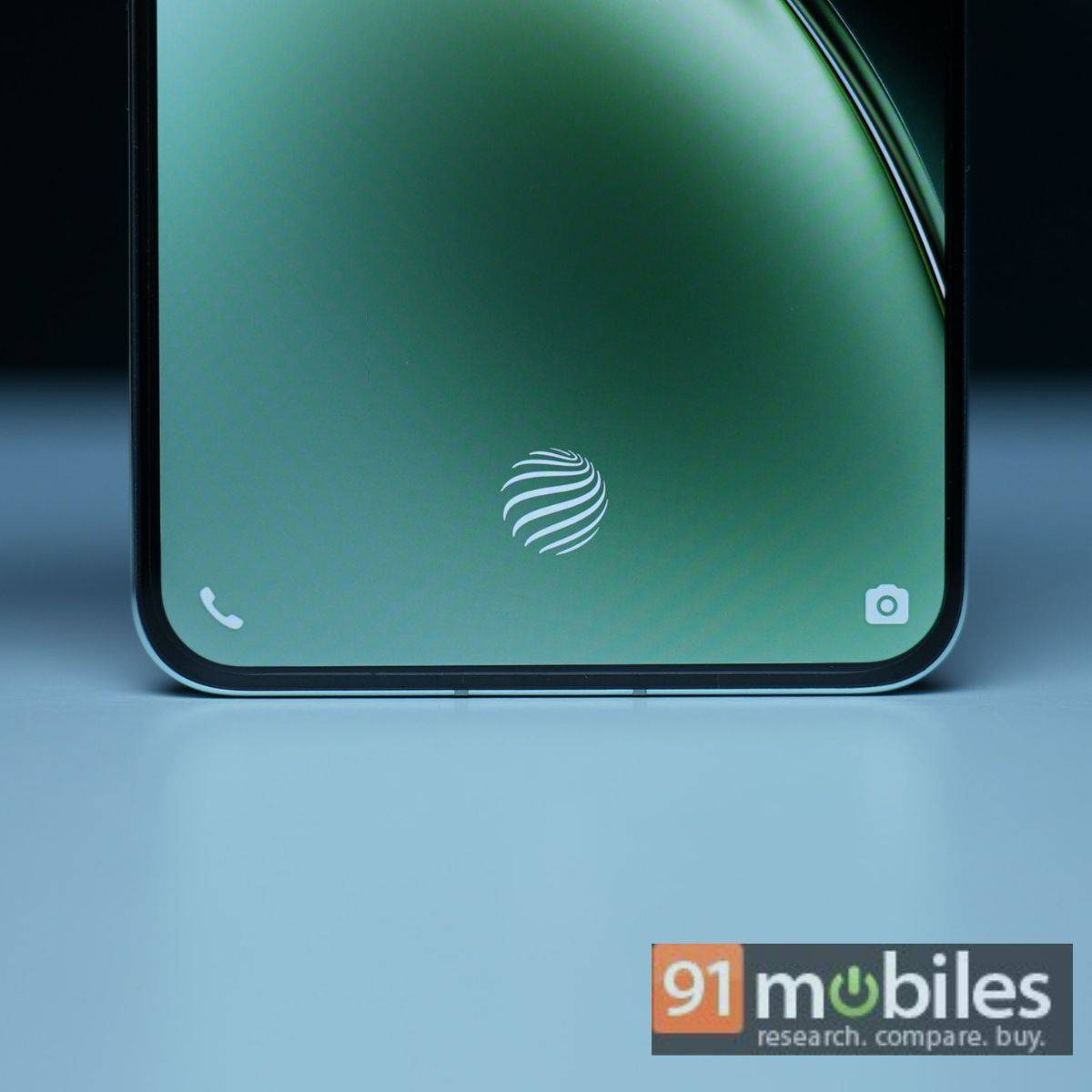
The X200 Pro packs an ultrasonic in-display fingerprint sensor, which is snappy, and to make it visually appealing, Vivo offers multiple on-screen animations. There's also a face unlock feature that works well.

It comes in a single variant - 16GB+512GB storage
UI and AI
The X200 Pro runs Funtouch OS 15 based on Android 15. Vivo gets a brownie point for at least shipping the X200 Pro with Android 15; otherwise, we have a few recent smartphone launches where devices have been released with Android 14 out-of-the-box. The phone gets 4 years of Android OS updates and 5 years of security updates - again, a first from Vivo.

The X200 Pro comes with 4+5 years of software support
Funtouch OS 15 offers a cleaner and more minimalistic interface than previous Funtouch OS versions. App launches are quicker, and animations are smoother than X100 Pro. Plenty of customisation options include icon styles, shapes, and even sizes. Users can also personalise the lock and home screens. Vivo also touched upon its all-new Guardian Privacy Protection Matrix, which sounds more like the Samsung Knox equivalent for Vivo phones.
There are also AI features like AI Note Assist, AI-enhanced signal boost, AI screen translation, AI transcript assist, Vivo live call translation, and Circle to Search. I tried some AI features like AI Note Assist and AI screen translation, and they worked as expected. However, more polishing is required.

It comes with a bunch of preinstalled apps
The Albums app, Vivo's official gallery app, has some AI features for post-clicking editing, like AI Photo Enhance and AI Erase. They worked well during the review duration. Vivo has also made the link to Windows feature work more smoothly than before.
Apart from the Vivo suite of apps, the X200 Pro packs some third-party apps like Snapchat, Myntra, LinkedIn, Netflix, Facebook, and more. Of course, users can delete these apps if they seem unnecessary.
Vivo X200 Pro Battery: Big leapBattery size: 6000mAh battery
Fast-charging: 90W FlashCharge
Wireless charging: 30W support
2025 is the year when the 6000mAh battery will be a standard in high-end Android phones, and you can say that Vivo is an early adopter. The X200 Pro packs a semi-solid battery tech that can ensure optimum battery performance in extreme weather conditions, be it minus 20-degrees. The phone supports 90W FlashCharge and 30W wireless charging.

It supports 90W FlashCharge
In real-world scenarios, the X200 Pro is outstanding in the battery department. The phone delivered over 10 hours of screen-on time during my review in multiple test runs. In our HD video loop test, the phone lasted for a good 18 hours and 30 minutes. With heavy usage, the phone easily lasted over a day on a single charge where I had apps like Outlook, Slack, WhatsApp, Telegram, Gmail, X, Instagram, YouTube, Canva, and Maps open in the background at all times while using the camera for clicking photos and an hour of gaming. Of course, the output can change in different use cases. But I can guarantee that the X200 Pro can outshine other flagships like the iPhone 16 Pro Max and Pixel 9 Pro XL in any battery comparison. The phone can charge from 0 to 100 percent in under an hour, which is again impressive for a battery of this size.

Vivo X200 Pro can easily outshine competition devices in the battery department
Vivo X200 Pro Verdict
The X200 Pro is another masterstroke from Vivo. It packs in so much that when you compare it with any other rival smartphone in its price range, the X200 Pro beats them hands down. Of course, the first set of users sliding towards X200 Pro have to be camera enthusiasts, and there is no point in guessing that. But, as an overall package, the X200 Pro is Vivo's best smartphone offering in its 10 years of existence in India. Yes, it's that good.

The phone comes with a charging adaptor in the box
The cameras will blow you away, while the design will grow on you as you spend more time with the X200 Pro. Performance is handled well; software-wise, this is Vivo's most sorted device yet. The IP68 + IP69 ratings should give you peace of mind while navigating in some challenging conditions. The battery is a class apart and sets the benchmark high for other Android flagship smartphones. There are a few niggles, like the software still has bloatware, but none of the apps onboard will keep throwing random ads at you, and then inconsistent skin tones can be taken care of by jumping to Pro mode. The selfie camera is the Achilles heel of X200 Pro - not the best, but not the worst.
If you're looking for alternatives, then Oppo Find X8 Pro (Review) is the closest to match the spec sheet and features list. At the same time, there are other options like the Samsung Galaxy S24 Ultra (Review), Pixel 9 Pro XL (Review), and iPhone 16 Pro Max (Review), but you will have to spend significantly more.
Verdict
The Vivo X200 stands out as one of the best camera smartphones in its segment, excelling in both still photography and video. With new additions like the Dimensity 9400 SoC and a 5,800mAh battery, it also proves to be a reliable contender for productivity-focused users. However, Vivo could further improve the user experience by minimising the number of pre-installed apps. Additionally, integrating generative AI features, which competitors like Samsung and OPPO are rapidly adopting, could give it an edge.Design and display
Vivo evidently wants to shout cameras with the new X200 series’ design, and it successfully does so with the large round module on the back. This theme is becoming common among camera-focused smartphones, starting with last year’s Vivo X100 series, followed by Xiaomi 14 Ultra (review), and most recently adopted by the OPPO Find X8 (review) series. The upcoming OnePlus 13 also features similar design language.
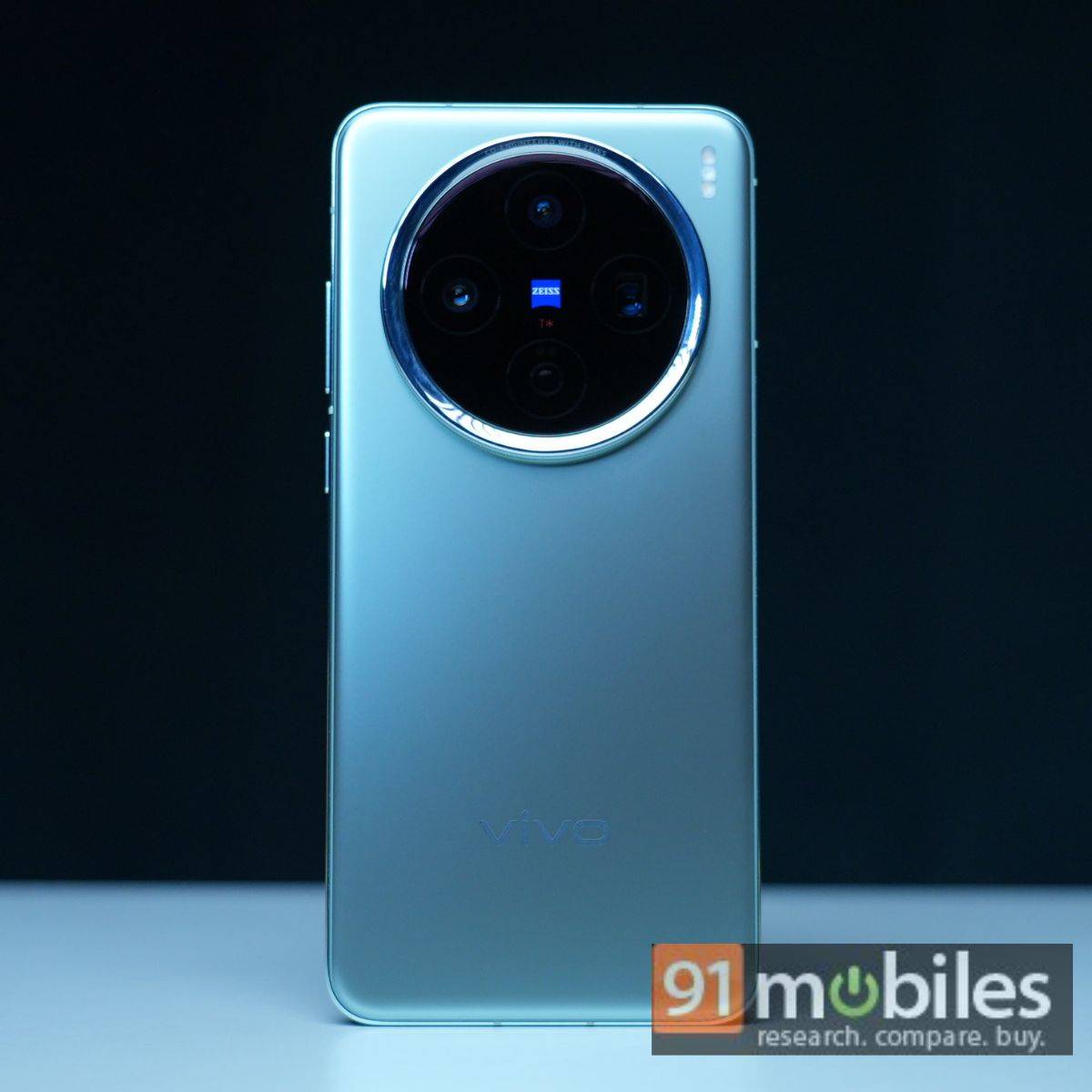
However, Vivo continues to offer its premium smartphones in limited colour options, whereas rivals like Apple and Google offer plenty of choices to users of different age groups. I reviewed the Natural Green variant, which I prefer over the Cosmos Black option. Vivo could’ve considered adding more options like White and Blue, which would’ve blended well with this textured matte glass finish.
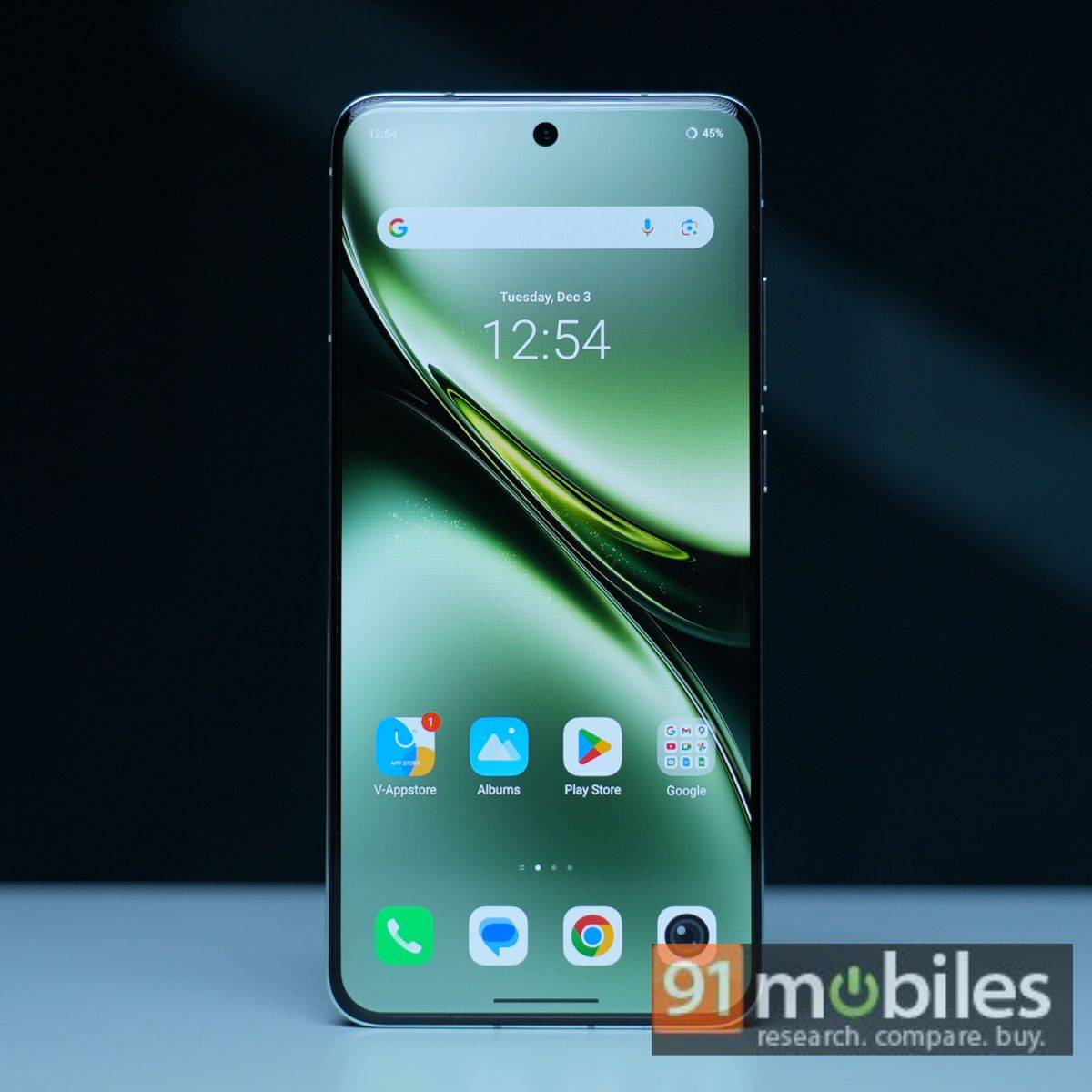
During my review, I travelled extensively with the Vivo X200, spending considerable time on flights watching movies on Netflix and other OTT platforms. The device’s narrow bezels, bright display output, and various display profiles contribute to an impressive viewing experience. Its visual and audio performance is on par with the OPPO Find X8, offering comparable brightness (in nits) and audio quality (in decibels). Based on our research data, the Pixel provides a brighter and more colourful viewing experience, although its display size is considerably smaller.
Cameras
While the Vivo X200 Pro features an upgraded 200MP telephoto camera, the standard X200 model has a comparable 50MP telephoto lens. Two more 50MP sensors are on the back, and the front houses a 32MP selfie camera. Like last year’s models, Vivo’s partnership with ZEISS continues, proving that lenses are equally important as the sensor and other camera components. Vivo has also done a fantastic job tuning the camera hardware with software, making it truly difficult to click “bad” photos with the X200.
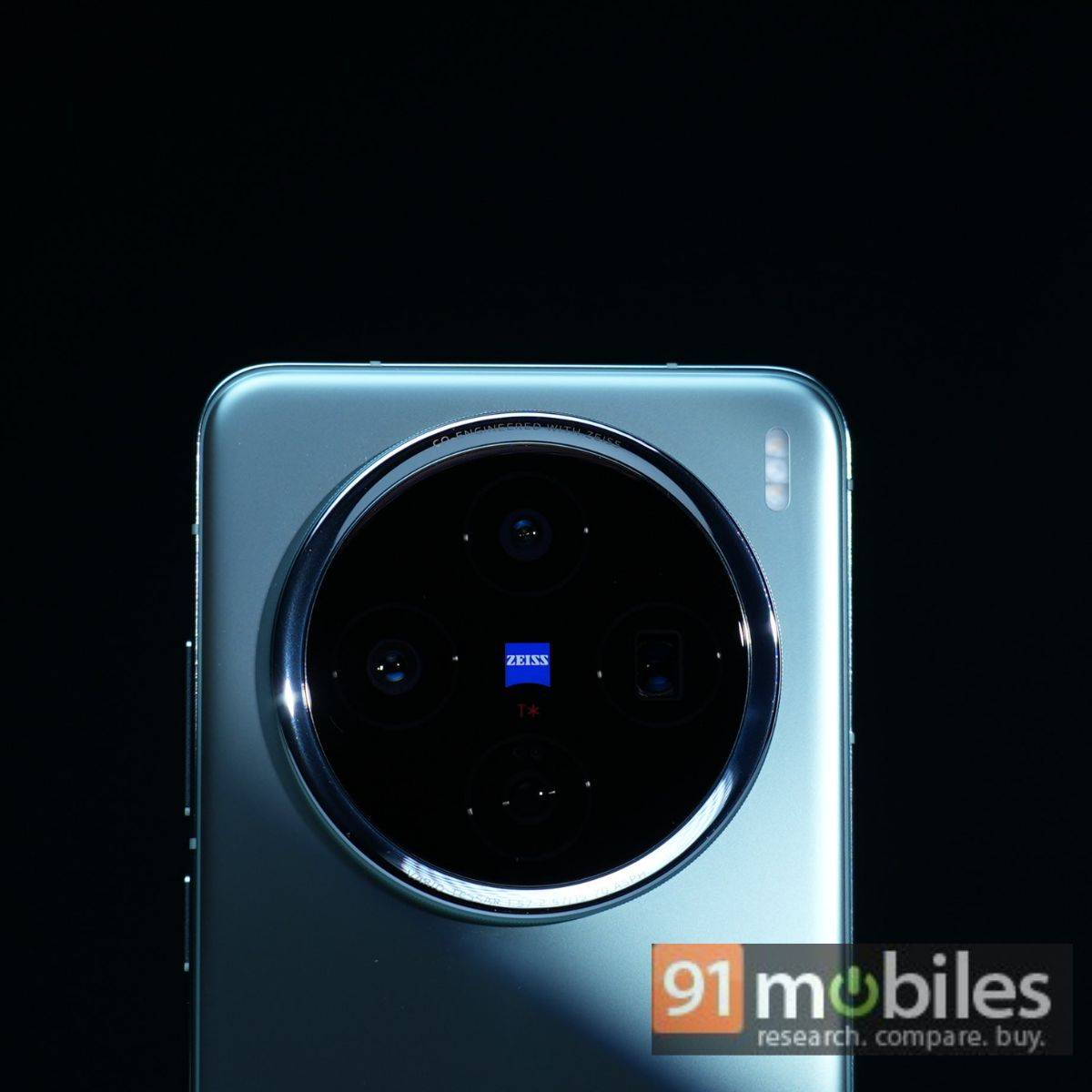
The only thing missing from the regular model is the tele-macro camera for stunning close-ups. The Vivo X200 also surprised me with its video stability. However, the white balance can be slightly inconsistent, which may not appeal to professional content creators. Vivo also offers AI-backed video editing features, but they do not significantly enhance the final output.
We also compared the X200 against popular rivals, such as the Pixel 9 and Find X8. Here’s what we found.
Daylight
Between the Vivo X200 and Find X8’s daylight shots, there’s an evident difference in the colour science since the former leans towards a warmer white balance. The X200 prioritises a cooler/natural white balance while boosting green spots across the photo.
Performance and software
The Vivo X200 is the latest smartphone to utilise MediaTek’s flagship Dimensity 9400 SoC. The base variant, which I am reviewing, has 12GB and 256GB storage and sells for Rs 65,999. The top variant with 16GB RAM and 512GB storage costs Rs 71,999. This puts the Vivo X200 up against competitors like Dimensity 9400 SoC-powered OPPO Find X8 and Tensor G3 SoC-powered Google Pixel 9 (review).
Notably, the Vivo X200 performed relatively better than the Find X8 despite using the same chipset. It is also ahead of the Snapdragon 8 Gen 3 SoC-powered OnePlus 12 in the AnTuTu benchmark (17,97,705). However, the Snapdragon 8 Gen 4 SoC-powered iQOO 13 dominates our AnTuTu list with over 28 lakh points. The Burnout CPU Throttle suggests the X200 may exhibit issues under severe workloads.
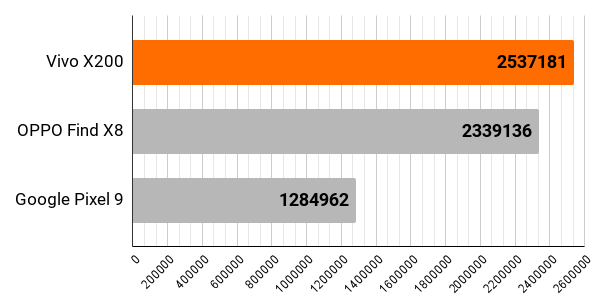
Beyond the benchmark numbers, the Vivo X200 proved to be a reliable performer throughout my extensive review. I rarely encountered issues while running multiple apps simultaneously. The device also boasts a snappy camera shutter and handles gaming well despite its primary focus on photography and daily productivity.
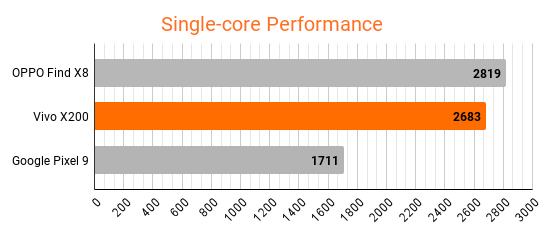
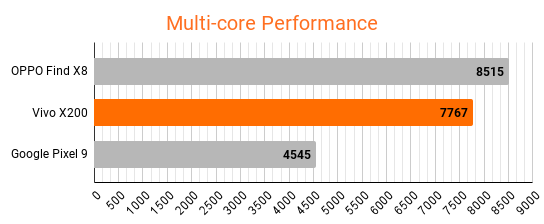
The phone ships with Android 15-based FuntouchOS 15 and promises four years of major OS updates. In terms of AI features, the custom UI offers the bare minimum, such as AI summary on the native notes apps. There are some camera-focused AI-backed features like “Object Remover” and “Repair,” but that’s mostly it.
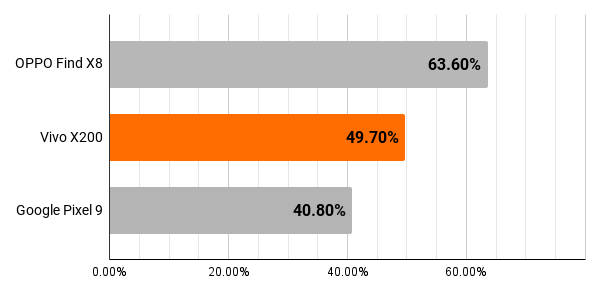
While the FuntouchOS 15 feels snappier with smoother animations, it still includes several third-party apps, which may not sit well with Android loyalists.
Battery and charging
As mentioned, the Vivo X200 packs an upgraded 5,800mAh battery with 90W wired charging support. Vivo has done a splendid job of maintaining the phone’s aesthetics without significantly impacting portability. During my extensive usage, the X200 easily lasted an entire day with the highest settings enabled. The backup can naturally be extended with moderate settings.
Final verdict
The Vivo X200 exemplifies that even non-Pro smartphones can deliver an exceptional camera experience. Thanks to its collaboration with ZEISS and an intuitive camera UI, capturing photos feels both enjoyable and effortless. As I mentioned, Vivo has done an excellent job with software optimisation, making it difficult to take a “bad” photo in either bright or dim lighting conditions. With 4K recording support on both the front and rear cameras, the Vivo X200 is also a dependable choice for content creators.
But not just cameras, the Vivo X200 offers snappy performance, thanks to the MediaTek Dimensity 9400 SoC onboard. There’s still ground to cover in the AI department, and for that, the Find X8, Galaxy S24, and Pixel 9 are better options. If that isn’t a deal breaker, the Vivo X200 represents bang for your buck.
Editor’s rating: 8 / 10
Reasons to buy:
- The Vivo X200 features a tall vivid display.
- It takes exceptional portrait shots.
- The phone offers a reliable battery backup with fast charging.
- It has a premium build with upgraded durability.
Reasons to not buy:
- The Vivo X200 skips wireless charging.
- The phone comes with several pre-installed third-party apps.