

The Google Pixel 7 Pro was a good smartphone overall. It packed in everything a casual smartphone user would expect from an Android smartphone including, the now standard, timely software updates. But it came up short in a few areas like battery life, charging and had its fair share of heating issues and camera-related bugs as well. With the new Pixel 8 Pro, there's a brand-new design, plenty of AI-enabled features and even a new processor. Keeping this in mind, one would naturally expect Google to have worked on some if not all of the shortcomings of its predecessor. But that's not exactly the case with Google's newest Pixel flagship.
Google Pixel 8 Pro price in India
Unlike last year, Google's Pixel 8 Pro finally offers a higher storage option in India. After years of complaining about offering a measly 128GB of storage with its base models, Google finally decided to add a new storage tier in India with the introduction of a 256GB variant. I received the 128GB storage variant for review which is priced at Rs. 1,06,999 in India, while the 256GB variant is available at Rs. 1,13,999.
As mentioned in my first impressions, both the Pixel 8 and the Pixel 8 Pro, are Google's most expensive Pixel smartphones to launch in India. Simply put, the new top-end Pixel 8 Pro has received a price hike of Rs. 22,000, which instantly puts it out of reach of several potential buyers. And then you have to keep in mind that even at Rs. 1,06,999, you are still getting just 128GB of internal storage and no free cloud storage access either.
Indeed, Google has its hands full when it comes to convincing its existing Pixel users to upgrade to the latest model this year. And it's probably one of the reasons why you are reading this review.
Google Pixel 8 Pro Review: Design
Google's Pixel 8 Pro has seen more changes than the standard Pixel 8 (Review) this year. Basically, Google's engineers got rid of some unnecessary stuff and made some refinements to the Pixel 7 Pro's design. Keeping in mind its flat display, and overall flatter profile it qualifies as a new design. But it is an overhaul of sorts as the new Pixel 8 Pro still appears distinctly Pixel. This is mainly down to its sharper, visor-like camera module at the back which is as chunky as last year's model.

The visor-like camera module still gets scratched easily, just like the Pixel 7 Pro
The camera module's edges are quite sharp unlike last year's model, but I'm glad Google retained its chunky protruding appearance because it makes it easier to hold on to the phone's rather slippery matte-finished body by resting my index finger below it for support.
The matte-finished rear glass panel is a first for Google's Pixel range and its overall rounded appearance and curves do remind me of the original Pixel and Pixel XL smartphones. As slippery as the rear panel is, it's excellent when it comes to resisting fingerprints. At 213g the phone does not feel too heavy or too light. This combined with the soft-finished glass back lends the device a very premium and luxurious feel.

Google's Pixel 8 Pro definitely looks the part for a premium smartphone
Google also offers an IP68 rating which is the same as on last year's model. Build quality is quite solid and I'm glad Google finally got rid of the curved edge display which seemed pointless on a Pixel, given that it never had any added software features like on Samsung's smartphones.
Google Pixel 8 Pro Review: Specifications and software
This year's Pixel 8 Pro brings another new chipset called the Tensor G3. It's built using the 4nm manufacturing process, which in addition to its new nona-core architecture should in theory translate to better performance and efficiency. However, Google is more focused on its AI capabilities and this is where it is expected to shine. 12GB RAM is standard and the phone offers up to 256GB of storage this year with no expandable storage and no additional SIM card slot. However, one can use the eSIM functionality to use two numbers on the same device.
In terms of connectivity, the Pixel 8 Pro offers an upgraded WiFi 7 experience, Bluetooth 5.3, NFC, a USB-C port, ultra-wideband (UWB) support and support for several global positioning systems.

The Pixel 8 Pro's (right) design shares some similarities with the older Pixel 7 Pro (left)
Apart from the usual camera array, there is also a new thermometer which can be used to check the surface temperature of various materials. Google will be adding support for checking body temperature soon, which would make it useful if it turns out to be accurate.
The phone has a 5,050mAh battery and supports 30W wired charging and 23W wireless charging. However, the box contents don't include a supported charging adapter.
Going with the AI trend, Google introduces its new AI wallpaper feature which is exclusive to this year's Pixel 8 and 8 Pro devices. It needs an internet connection to work but chomps out some really unique and interesting wallpapers using its AI bits. The rest of Android 14 feels and appears similar to what's available on a Pixel 7 Pro.
Other new smarts that are available on the Pixel 8 Pro include the ability to read aloud web pages or articles from a web browser. Google Assistant can even translate a web page before reading it aloud which is also useful. The operation is properly hands-free on the Pixel 8 Pro (I could not get the feature to work successfully on a Pixel 7 Pro), which is useful if your hands are busy.

The AI Wallpaper feature is a fun way to sample the power of AI and create some unique wallpapers in the process
The Pixel 8 Pro's AI editing tools, which are available in its Photos app are jaw-droppingly impressive in terms of capability. While the older Magic Eraser has gotten much better over time, the newly advertised tools still need a bit of polish in terms of output.
The new Magic Editor tool lets you literally reposition people and objects in a photograph (which has to be uploaded to the cloud). The AI models sure are impressive! At times it can get really hard to tell if an image has been edited at all. However, pixel-peeping into these photos usually reveals some clues. Magic Editor isn't perfect and should get polished with future updates, but it is a very powerful tool nonetheless.
The same can be said about the new Best Take feature which requires a sequence of photos of the same setting in order to work. If you happen to have enough photos of the same people in the same setting, then it's rather hard to tell if an image has been edited.
Audio Magic Eraser is another AI-enabled tool, which can impressively understand the sounds in a video. Once activated, it listens to the clip and quickly identifies the different sounds and then categorises them (speech, nature, wind, noise etc.) letting one adjust the levels to bump up the volume of the sounds they wish to hear (speech, nature) over the ones that they want to quieten (noise, wind). While I did not find the results all that impressive, it is interesting to see how the AI model identifies the different sounds in any given video.

The Audio Magic Eraser tool in the Photos app is useful for removing or reducing unwanted sounds in a recorded video
As controversial as these image editing features are, I can see a lot of Pixel 8 and 8 Pro users helping many who aren't able to snap good-looking photos. Moreover, Pixel 8 Pro users may seem like wizards to elderly folk who usually don't end up composing a vacation photo right, and often request the unimaginable, like moving the Eiffel Tower a bit to the right. Surprisingly, all of that and more is now possible using simple drag-and-drop tools.
As impressive as the Pixel 8 Pro's photographs and editing capabilities are this year, I still faced the same camera bug as on last year's models. The Night Sight bug triggers when shooting back-to-back photos from the camera app's night mode when transitioning from 1X to 2X. Once triggered, all photos captured thereafter do not get stored in the phone, leaving one with a camera that will let you click photos but not save them. The only way to get the camera to start storing snapped photos again is to restart the phone or wait for the camera app to crash.
For long, Pixel smartphones have always been the first devices to receive Android software updates and Google has somehow managed to one-up itself in this area with the Pixel 8 and Pixel 8 Pro. Google claims that it will provide up to 7 years of software updates which includes its quarterly Feature Drops (that bring new features) and security updates. Adding to this commitment Google also explained that it will stock up on spares for these two smartphones as well, in case your smartphone gets damaged or stops functioning over the next 7 years. Indeed such commitments will appeal to those who don't upgrade their devices frequently, but replacing your smartphone less frequently works well for the environment as it also reduces e-waste.
Google Pixel 8 Pro Review: Performance
As for the Pixel 8 Pro's 6.7-inch QHD+ OLED display, it works well under bright sunlight and shows fairly accurate colours when set to the Natural colour mode. Its 120Hz dynamic refresh rate, which can drop to 1Hz when not being used, also works as expected.
Just like last year, battery statistics aren't all that great as I often found me reaching out for the charger by the end of a work day with about 20 percent left around 7:00 PM, after unplugging the phone at around 8:00 AM. If you end up using the camera and edit several images expect the battery levels to drop even faster. In our video loop battery test, the Pixel 8 Pro managed to last for 14 hours and 15 minutes, which is slightly better than the Pixel 7 Pro, but not great compared to what most smartphones in this segment are capable of. Samsung's Galaxy S23 Ultra which currently retails an additional Rs. 20,000 managed to last 21 hours and 7 minutes in the same test.

The Pixel 8 Pro (right) has a flat display compared to the older Pixel 7 Pro (left)
On the Pixel 8 Pro, most casual and high-end games run just fine at default settings. But the phone clearly isn't as powerful when compared to its Qualcomm Snapdragon-powered counterparts so don't expect flawless frame rates when playing graphics-intensive titles like Genshin Impact or fast-paced games like Call of Duty: Mobile.
The phone does warm up after playing a few Call of Duty tournaments on Ultra settings, but it does not get abnormally hot and that's mainly down to CPU throttling. However, one can expect plenty of frame drops during gameplay as the Tensor G3 isn't really designed for running demanding titles at the best settings. Ray-tracing, while being relatively new, is also not supported. I also found the touch sampling to be a bit sluggish when playing fast-paced FPS games.
The Tensor G3 inside the Google Pixel 8 Pro managed slightly inferior scores compared to most smartphones in this segment and were far below what Apple's latest iPhone 15 Pro Max is capable of. The Pixel 8 Pro scored 10,38,343 points in AnTuTu and managed scores of 1,629 and 3,274 in Geekbench's single and multi-core tests. To give you an idea about where Google's Pixel 8 Pro stands, the lower-priced OnePlus 11 5G (QHD+ display) which we reviewed earlier this year scored 11,89,556 points and Samsung's Galaxy Z Flip 5 (FHD+ display) managed a score of 12,87,359 while the iPhone 15 Pro Max managed a comfortable lead scoring 16,61,205 points in our review.
Google sticking with its own Tensor design for its processor does have its downsides as they have yet to figure out better ways to handle all the processing that happens after snapping a photograph. Just like the Pixel 7 Pro, the Pixel 8 Pro struggles when shooting Portrait mode photos and will stop capturing photos (or disable the shutter button) when the photo buffer is full after clicking around 7-8 portrait mode photos in quick succession. It does this to finish processing them in the background and will let one snap more photos only once it's done processing the ones that have already been captured. While this does not seem like a big problem, I did end up missing several moments while snapping photos of my kid. Shooting RAW photos also takes a while to process, compared to the iPhone 15 Pro Max which is almost instant.

The Pixel 8 Pro just like the Pixel 7 Pro runs a bit hot outdoors when connected to 5G networks
For a phone that's more focused and known for its photography features, it's sad to see that the latest Tensor G3 SoC isn't capable of handling the basics. Google really has to work on the Tensor G3's imaging pipeline or go with a separate imaging chip solely for handling all of its camera requirements as the current Tensor G3 processor clearly isn't up for the job.
Even with daily usage, something as simple as scrolling through web pages and social media apps (even YouTube) can get jittery at times. Scrolling is jittery when using both native and third-party apps and this is something many users have complained about on Reddit as well. Google took its own sweet time to attempt to resolve its Pixel 7 Pro's scrolling issues, but these have yet to be resolved successfully.
The phone still gets hot when using the camera app, especially when shooting more complicated camera modes like Portrait and Night mode. The phone also gets quite hot outdoors when connected to 5G networks. Google still does not offer any cooling solution (apart from CPU throttling) with its Pixel phones, which keeps them running warm most of the time when used outdoors. Many Chinese smartphone brands have adopted vapour chamber cooling to maintain performance levels while performing power-intensive tasks. This year's Samsung Galaxy S23 also utilised the same, making it run a lot cooler compared to its predecessor. So, it's really a mystery why Google refuses to include the same in its flagship Pixel smartphones.
The new and secure Face Unlock feature works as quickly as Apple's Face ID authentication, however, it only works well (or quickly) in good lighting. Dimly lit settings will see the camera struggling to recognise faces, which is when I had to revert to the good old fingerprint scanner, which thankfully worked as expected.
Google Pixel 8 Pro Review: Cameras
This year's Pixel 8 Pro comes with several improvements in the camera department as well. Key among these is the new 48-megapixel ultra-wide-angle camera which replaces the 12-megapixel camera on the previous model. There's a new brighter 50-megapixel primary camera as well but I expect minor improvements (if any) with this one. Everything else apart from the new Tensor G3 remains the same, which is not a bad deal as the previous Pixel 7 Pro was not bad at imaging to begin with.
The camera modes have been revamped on the Pixel 8 Pro. The Pixel 8 Pro in particular this year gets a special pro mode called Pro Controls, which brings advanced camera controls for smartphone camera enthusiasts who prefer to tweak things a bit before shooting or while recording.
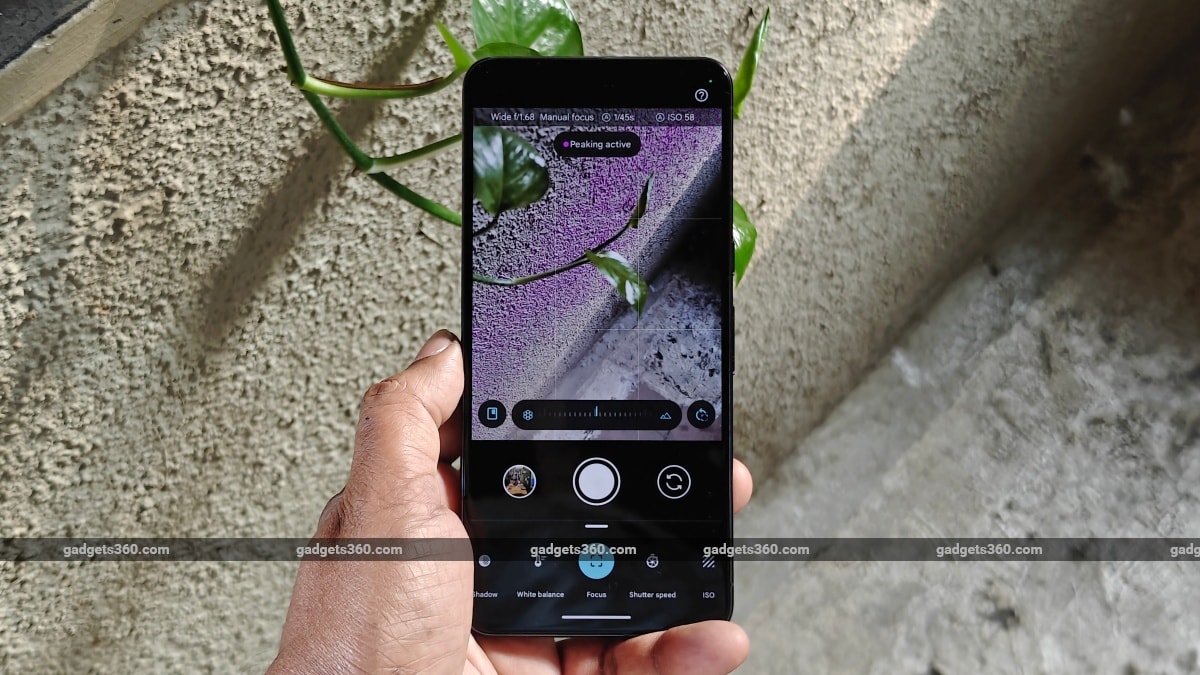
Pro Controls is wonderfully designed with practicality and simplicity in mind, making it easy to use and understand
To be clear, the Pixel 8 Pro's Pro Controls mode is not as advanced as the Samsung Galaxy S23 Ultra's camera app which also offers various controls for video. The Pixel 8 Pro's Pro controls seem a lot more user-friendly (designed for the average Joe), and quite practical at the same time, easily making it a lot better in terms of capability and control when shooting video, even when compared to an iPhone 15 Pro Max, I reviewed earlier.
Unlike the Pixel 7 Pro where one gets access to brightness, shadow and white balance sliders in the viewfinder when shooting, the Pixel 8 Pro hides all of its Pro controls under a settings button located at the top right corner. Tapping on it gives one access to advanced controls like Night Sight duration, brightness, shadow, white balance, focus, shutter speed and ISO as well. I particularly liked the focus control as it highlights the currently focused area in pink thanks to a focus peaking feature like on a real camera.
Tapping on the usual gear icon at the bottom now opens a comprehensive menu with a special Pro tab in which one can select the resolution (binned or full frame), output type (RAW/JPEG) and a very handy Lens Selection selector, which lets you choose between Auto or Manual. Choosing Auto basically gets you the entire zoom range which also includes the digital levels between the native focal lengths (0.5X, 1X and 5X).
The manual gets you access to just the native focal lengths, which switches off the camera's automatic lens selection. This is useful to avoid using the wrong camera (which the smartphone automatically selects depending on the distance of the object/subject from the lens. This often leads to digitally cropped and scaled photos. So, if your subject is too close for the 5X telephoto camera, it just won't focus, letting you know that you need to maintain a greater distance to get the perfect shot.
Pixel 8 Pro also lets one shoot in RAW using all three cameras which means you can get high-resolution (50 or 48-megapixel) RAW images which can be tweaked later in the post. As for the video, Pro Controls only lets you tweak white balance and exposure in this mode.

The Pixel 8 Pro and Pixel 7 Pro camera samples were captured in daylight and low light using their primary cameras (tap image to expand)
As for image quality, I found the images from the primary camera to be almost identical to last year's model. The minor differences are mainly down to the tone where the Pixel 8 Pro chooses cooler tones compared to the Pixel 7 Pro's warmer hues. The level of detail is second to none, but I often noticed that colours aren't as accurate even though the photographs looked good. Low-light imagery is fantastic, but I noticed that the primary camera tends to crush the blacks in settings with contrasted lighting.


Google Pixel 8 Pro captures some quality 5X telephoto shots (top) and macro photos (bottom) (tap images to expand)
Photos from the ultra-wide camera, which has seen the most changes this year, pack in more detail and dynamic range when shooting in daylight. Colours are quite accurate as well. Macro photos also came out great and the new camera lets you get even closer (up to 2cm) to your subject.

Google Pixel 8 Pro and Pixel 7 Pro daylight and low-light camera samples captured using their ultra-wide-angle cameras (tap image to expand)
In terms of zoom, the telephoto camera shoots really impressive photos with good detail. I used the 5X telephoto to capture some crisp portraits and close-ups and well and they all looked gorgeous with a natural bokeh. Going beyond its optical limits, Google's Super Res Zoom manages quality images up to 10X (hybrid zoom) but the quality starts to dither thereafter.

Google Pixel 8 Pro telephoto zoom camera samples captured in daylight (tap image to expand)

While it manages good image quality, the Pixel 8 Pro just like the Pixel 7 Pro struggles with edge detection when in Portrait mode (tap image to expand)
After managing average video quality last year, it's good to see that Google has finally upped its video game. 4K 30fps video recorded from the primary camera looks sharp, has a good bitrate and offers a steady frame rate. Stabilisation is also impressive, making it a solid upgrade over the Pixel 7 Pro's video recording capabilities. Low light footage also has good detail with low noise. HDR footage shot at the same resolution appeared a bit saturated but showcased good contrast and detail even in low light.
Google Pixel 8 Pro Review: Verdict
What sets the Pixel 8 Pro apart from every other Pixel of the past, is its AI capabilities. It's a direction that Google has charted for its Pixel smartphones, and the Pixel 8 Pro surely shines in this area with the ability to process a lot of requests and use several tools without the need to connect to the internet or the cloud for processing. The very capable and well-designed built-in Pro Controls is also an area which mobile photography enthusiasts will enjoy.
But the price hike may convince many upgraders to stick with their Pixel 7 Pro models this year as all of the above-mentioned features (except for a 7-year commitment for software updates) don't really seem like must-haves on anyone's list.
To make things worse, the Pixel 7 Pro today retails for as low as Rs. 63,999, which isn't a bad deal, depending on what one is looking for in a new smartphone purchase. Its still camera performance is similar to the Pixel 8 Pro but falls behind when it comes to video recording. The new Pixel 8 Pro may not heat up as much as the Pixel 7 Pro but its battery life only offers minor improvements over the older model.
If you are willing to spend upwards of Rs. 1,00,000 in India, Samsung's Galaxy S23 Ultra (Review) (available at Rs. 1,24,999 for the 256GB variant) surely offers better value, with impressive zoom capability, a better and larger display, excellent battery life, and to an extent even Samsung's Galaxy ecosystem of devices which includes, smartwatches, audio accessories, tablets and laptops.

This design has also improved in subtle but important ways since it debuted with the Pixel 6 Pro. The Pixel 7 Pro replaced the plastic camera bar of its predecessor with a more premium and durable metal rendition, and now the Pixel 8 Pro puts each of the lenses inside the same oval black cutout, giving it an even cleaner visual style. That said, I like the island-style camera bar Google used on the Pixel Fold even more and would like to see something similar on the Pixel 9 Pro.
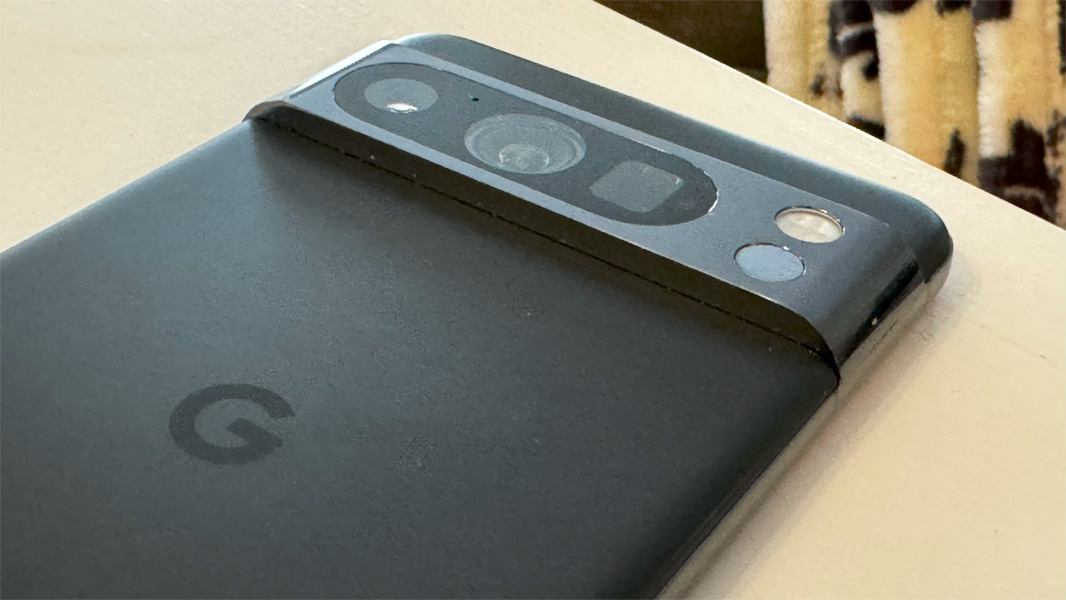
Google also moved back to a matte glass on the rear of the device—the Pixel 7 Pro was curiously glossy, and a fingerprint magnet—not that this change will matter to most: You’re going to want to protect this slippery slab of glass with a case. But here, too, we see another improvement: Google’s stock polycarbonate case is, for the first time, attractive and comfortable to hold without adding bulk, and it nicely complements the phone.
Google wisely continued forward with other design elements that still work well. As with its predecessors, the Pixel 8 Pro is a true “all-screen” smartphone, with tiny bezels, and the brushed aluminum side frame makes another appearance with its integrated antenna and SIM card tray cutouts. That you will hide with a case.
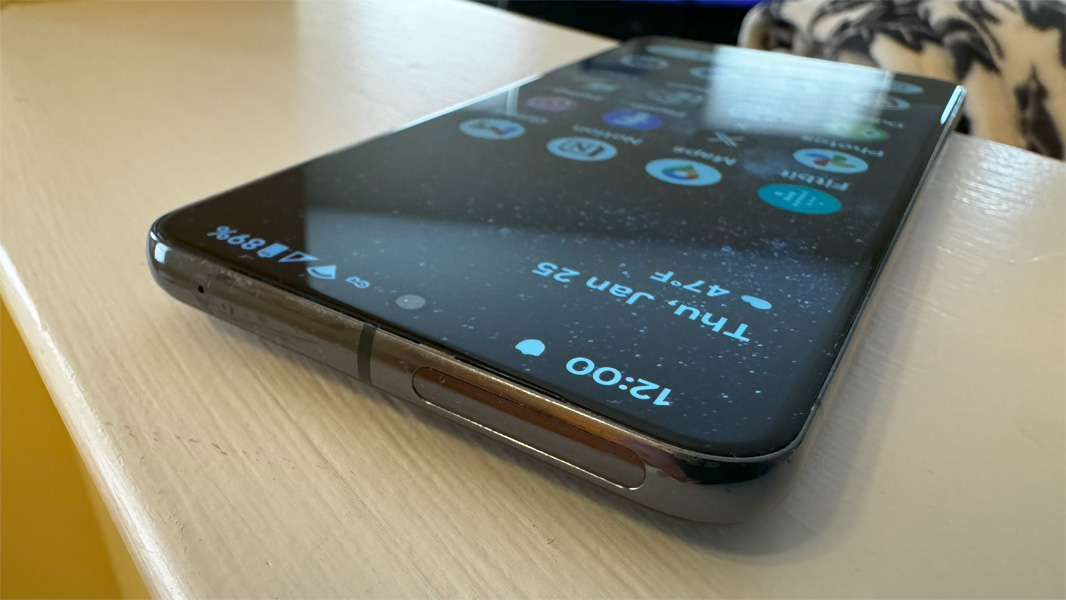
I described the Pixel 6 Pro and 7 Pro has being big and bulky, but after experimenting with smaller smartphones, I find myself preferring larger models like the iPhone 15 Pro Max and now the Pixel 8 Pro. This is a personal preference thing, of course, but I’m sure my age and eyesight play a role as well. Regardless, I find the Pixel 8 Pro, which actually weighs a tiny bit more than its predecessors and is roughly the same size, to be ideal for my needs. That said, it’s a stretch to use one-handed because the far top corner of the screen is so far away. This issue is not unique to this device, of course.
Display
Like its predecessors, the Pixel 8 Pro features a 6.7-inch, high resolution OLED display panel with a tall and thin aspect ratio, high refresh rate capabilities, and punchy colors and deep blacks. But there are differences both major and minor, and they collectively deliver the Pixel upgrade I’ve been waiting on for years: This display is perfectly flat and lacks the error- and glare-inducing curved sides that undermined previous models. Finally. Google is apparently so impressed by this upgrade that it’s even given this display an Apple-like name, Super Actua.

The name is terrible, but the display is terrific. Because of a negligible aspect ratio change—from 19.5:9 to 20:9—the Pixel 8 Pro’s 1344 x 2992 native display resolution is a tiny bit lower than the 1440 x 3120 found on its predecessors, with a corresponding dig in pixel density from 512 PPI to 489. I can’t imagine anyone would notice a difference—the lack of curved edges is far more obvious—but as with previous Pixels, I’ve left the Pixel 8 Pro configured with the default “high resolution” (1008 x 2244) rather than the native “full resolution” as it looks fine and should help with battery life.
Like its predecessors, the Pixel 8 Pro uses a dynamic adaptive refresh rate, and instead of just toggling between the standard 60 Hz rate to 120 Hz “for some content” as needed, it smoothly transitions from as low as 1 Hz all the way up to 120 Hz as needed. For the first time, I left this feature enabled: I don’t really notice the higher refresh rate when scrolling, and I don’t play games, but the battery life has improved enough with this model that I didn’t start tweaking additional display features to help solve the problem.
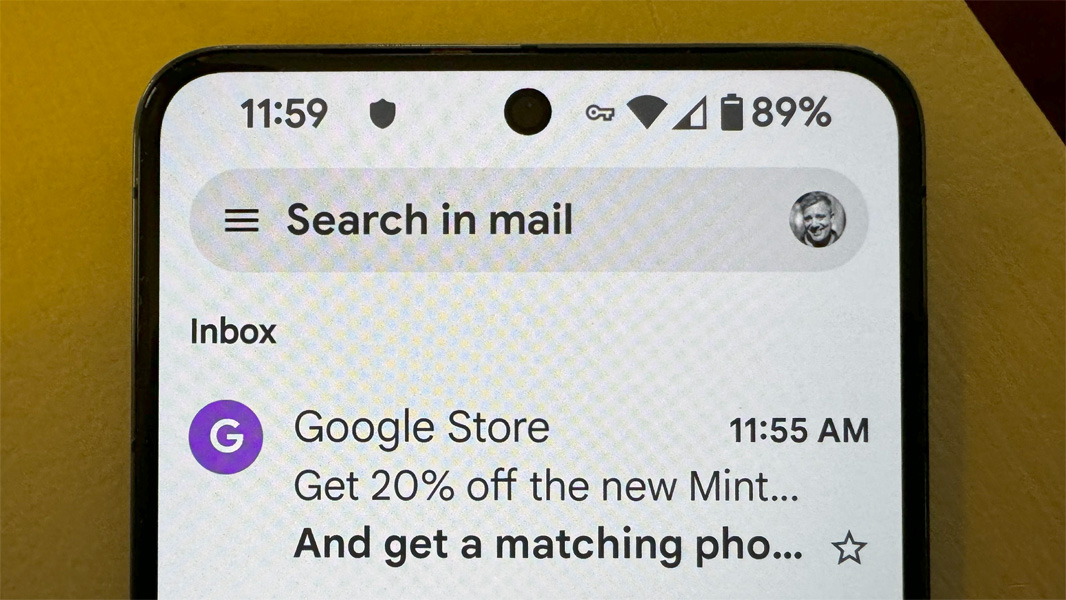
The Pixel 8 Pro display gets impressively bright—up to 1600 nits for HDR content with a peak brightness of 2400 nits—but I feel that its unheralded Extra Dim setting, which lets you dim the display beyond its minimum brightness, deserves more attention. When enabled, the Pixel 8 Pro no longer looks like high beam headlights in the dark as other phones do. This is almost certainly healthier for your eyes, but it’s absolutely more comfortable.
Finally, I have for the first time in years left the left adaptive brightness enabled because the Pixel 8 Pro doesn’t suffer from the extreme under-lighting issue as its two most recent predecessors. It’s not completely solved—I do sometimes need to manually bump up the brightness a bit—but it works noticeably better than before.
Hardware and specs
The Pixel 8 Pro is powered by the third-generation Google Tensor G3 processor, a 64-bit system-on-a-chip (SoC) design that marries a 9-core Arm Cortex CPU, Arm Mali-G715 GPU, and third-generation Google Tensor Processing Unit (TPU) into a single die using a 4nm Samsung manufacturing process. As with previous Tensor chipsets, Google optimized the G3 for AI and efficiency, not raw performance, and so it performs poorly against the latest Snapdragon and Apple chipsets on benchmarks. But real-world usage, as always, is another story, and in over two months of daily use, I have never once ran into a performance hiccup or hitch.
That said, something has changed and for the better: I blamed previous-generation Tensors for the slow charging experience and rapid heat gain that dogged the Pixel 8 Pro’s predecessors, but neither is an issue with the G3. Like any smartphone, the Pixel 8 Pro can heat up, sure, and I suspect prolonged game playing would prove especially challenging. But no one is buying a Pixel for games, and in normal use, this phone has never overheated, and the fast charging experience is, get this, fast. (More on that below.)
The Pixel 8 Pro ships with 12 GB of LPDDR5X RAM, a slight upgrade over the Pixel 7 Pro, and 128 GB, 256 GB, 512 GB, or 1 TB of fast UFS 3.1 storage, the same as last year. And with Google now guaranteeing 7 years of OS version upgrades and security updates, the Pixel 8 Pro is as future-proof as a smartphone can be: This support lifecycle exceeds anything Apple offers, and only Samsung matches it in the Android space.
Connectivity
Adding to its future-proof promise, the Pixel 7 Pro is the first smartphone I’ve owned with Wi-Fi 7 capabilities (which operates at 6 GHz in addition to 2.4 and 5 GHz), not that I’ve ever encountered such a network. It also features mmWave and Sub 6 5G cellular connectivity via both nano SIM and eSIM (one each), Bluetooth 5.3 with dual antennas, NFC, and an ultra-wideband (UWB) chipset. I’ve had no issues with connectivity at all: I routinely hit download speeds of about 950 Mbps on my Eero 6E mesh network, and my experience switching eSIMs from T-Mobile to Google Fi recently was seamless and quick.
Audio-video
As before, the Pixel 8 Pro provides stereo speakers, but this time they are augmented by spatial audio capabilities. I rarely watch movies or other videos, or listen to music, audiobooks, or other audio content, using the built-in speakers, opting for earbuds like a normal person. But I did test the Pixel 8 Pro to determine whether it suffers from the right/down audio bias that dogged the Pixel 7 Pro, and to see whether spatial audio is an any way interesting.
And I’m honestly not sure in either case. I feel like there might still be a slight bias to the right/bottom speaker, but that could be my hearing or the sound mix used by the selection of songs I sampled. For spatial audio, I turned to Netflix and streamed a selection of movies—among them, 6 Underground and The Adam Project—and, while the stereo separation in each was notably good, I’m not sure if I’d call it spatial. After all, there’s only so much two tiny speakers can do. And when I compared those movies to the original Jurassic Park, the audio experience of that 30-year-old film was no less impressive.
The Pixel 8 Pro also provides three microphones with noise suppression capabilities for phone calls and meetings. Like most people these days, I don’t spend a lot of time making phone calls normally, but I had some lengthy calls over the holidays, and they were all clear and drama-free, at least from a call quality perspective.
Cameras
Pixel phones, especially the flagship models, are renowned for the quality of the photographs they produce, and for good reason: The hardware is usually very good or better, but Google’s computational photography capabilities are the best in the business. And the results are almost always consistently better than what we see from Samsung and Apple flagships, with Pixel landing in a happy middle ground between the over-saturated shots we see on the former and the dull, lifeless shots that iPhone delivers by default.

The Pixel 8 Pro continues this trend, and it offers major hardware and software upgrades when compared to its predecessors. Where Pixel 6 Pro pushed forward with 4x optical zoom on its telephoto lens and Pixel 7 Pro finally added a truly-wide ultra-wide lens with minimal edge distortion, Pixel 8 Pro delivers a trifecta, with upgrades across the lenses, all of which are now high-resolution in the 50 MP range, until the iPhone 15 Pro Max, which continues to use low-resolution (12 MP) telephoto and ultra-wide lenses.

More specifically, the Pixel 8 Pro has a 50 MP Octa PD main (wide) lens with an f/1.68 aperture and an 82-degree field of view, a 148 MP Quad PD ultra-wide lens with an f/1.95 aperture and a 125.5 degree field of view, and a 48 MP Quad PD telephoto lens with an f/2.8 aperture, a 21.8 degree field of view, and 5x optical zoom (with “Super Res Zoom”, i.e. digital zoom with computational photography enhancements, up to 30x).


Each of these lenses is superior to their predecessors in some way, and Google has expanded the photographer’s options, giving us, among other things, resolution choices (12.5 MP and full-resolution 50 MP options on the main lens), new Pro controls (including the ability to disable automatic lens switching when focusing or zooming), new Portrait mode options, 5x optical zoom (up from 4x) on the telephoto lens, and much-needed improvements to video recording. I wrote about this more in Loving the Google Pixel 8 Pro Camera Upgrade (Premium) with the specific aim of keeping the length of this review manageable, so please refer to that article for more information.

Here, I’ll just say that the Pixel 8 Pro camera experience has never disappointed, and as always, I very much prefer Google’s default image processing, with its “Goldilocks” HDR boost, to that of Apple or Samsung. (Granted, in the latter case, I’m referencing my wife’s two-year-old Galaxy S22 Ultra; I will soon have an S24 Ultra for further tests.) After a lot of experimentation triggered by the new Camera app and all the new options, I use 12.5 MP (labeled as 12 MP in the app) on the main lens because 50 MP shots introduce too much shutter lag, and I use JPEG and not RAW images because I’m a snap shooter, not a professional. I do move back and forth between auto and manual lens selection, however, and love that the latter maps a specific lens to the onscreen UW, W, and T buttons in that mode.
Overall, I love this camera.

The selfie camera on the front is a bit different from that on the Pixel 8 Pro’s predecessors, but as a middle-aged man, I find taking selfies an awkward experience. The tech specs are similar to last year: It’s a single 10.5 MP wide lens with an f/2.2 aperture and a 95-degree field of view.

Security
Google struggled for years to provide Pixel users with biometric security features that work reliably and securely enough to authenticate your identity for Google Wallet usage, but the Pixel 8 Pro finally delivers. Its Face Unlock facial recognition capabilities are finally work reliably and well enough for Wallet, and for authenticating against apps like Microsoft Authenticator. And that means I have only rarely needed to fall back to the in-screen fingerprint reader, which is about as good as before and usually works fine. That said, it sometimes refuses to acknowledge a press on the lock screen in dark settings, forcing me to push the power button and try again, which always works for some reason.
Internally, the Pixel 8 Pro provides the same secure underpinnings as past Pixels, with its Titan M2 security chip, Trusty trusted execution environment, and private compute core. As noted, Pixel 8 Pro owners are among the first to get 7 years of security updates, which is wonderful. And the phone supports passkeys natively and has integrated anti-malware and anti-phishing protections. I can’t stop Google from tracking me online, but they do keep out the bad guys.
Battery
The Pixel 8 Pro delivers all-day battery life, if barely under heavy use, and while it continues to lag the iPhone in this regard, it’s improved just enough that I don’t worry about it as much as it did with its two most recent predecessors. I usually end the day with about 60 percent battery life if I don’t leave the house, or 30 to 40 percent if I go out in the world and listen to podcasts while driving or at the gym.
Charging is dramatically improved, and I’m surprised to report that the Pixel 8 Pro’s fast charging capabilities are superior to those of the iPhone 15 Pro Max. You can charge its 5050 mAh battery to 50 percent in 30 minutes with the right charger, and then things slow down from there, just not as horribly as with previous models. And if you buy a 30-watt USB-PD 3.0 (PPS) charger like the tiny Anker 511 Nano Pro I got (and recommend), it’s even better: I can hit a 50 percent charge in 25 minutes, several minutes faster than with the iPhone 15 Pro Max. A full charge is tough to measure as I never let it run completely out of battery life, but I estimate it to be about 80 minutes. Previous Pixels were closer to 2 hours, in part because they only supported 22-watt chargers.
In the past, I also complained about the heat generated by the Tensor CPUs in previous Pixels, and I’ve long theorized that this was responsible for the slow charging speeds I experienced with the Pixel 6 Pro and 7 Pro. Like any smartphone, the Pixel 8 Pro can get warm while charging, but it never gets truly hot despite the faster charging times. This isn’t market leading by any measure—second-tier phones from companies like OnePlus continue to embarrass the rest of the industry—but it’s a meaningful improvement that obviates my concerns.
As before, Pixel 8 Pro also supports wireless charging and that, too, is faster than before, at 23 watts (up from 15). I never tested that, but I did use its reverse wireless charging feature—which needs to be toggled on manually—to bring a friend’s phone back to life one time.
Unique hardware features
Aside from the aforementioned temperature sensor, reverse wireless charging, and physical SIM card support, there’s nothing especially unique about the Pixel 8 Pro from a hardware perspective. It has a USB Type-C 3.2 port for power and connectivity, IP68 dust and water resistance, and a fingerprint-resistant coating that may contribute to its matte finish. Nothing major.
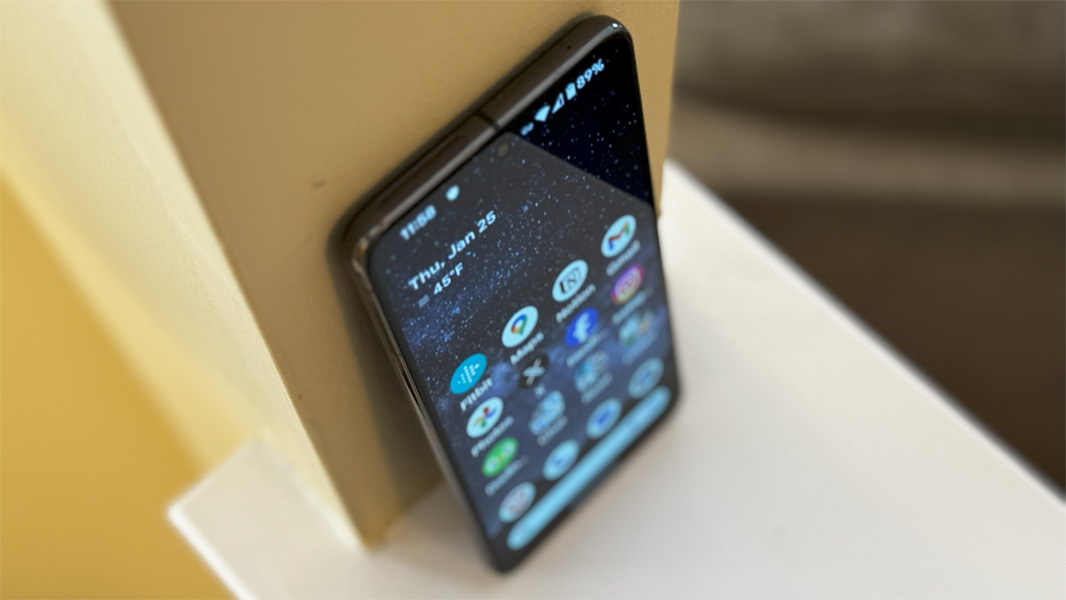
Software
In the end, Pixel sinks or swims on the success of its software, and this is where Pixel 8 Pro shines brightest. Indeed, this part of the review got so long that I’ve pulled it out and will publish an edited version as a separate post soon. For now, I’ll just say this: I very much prefer Android to iOS, in part because of its superior customizability. But I also very much prefer Google’s highly enhanced and optimized Pixel version of Android to any other version I’ve used.
This isn’t just a differentiator, it’s a game-changer: Google uses AI throughout the system to improve experiences both obvious and unexpected. It can screen phone calls and does a terrific job of intercepting spam texts and phone calls. It offers live translation capabilities and system-wide automatic live captioning of anything making sounds. It has numerous personal safety features, from car crash detection to safety checks and emergency sharing. There’s so much in there that it’s difficult to even keep track of it all, but equally impressive is that this mountain of helpful features doesn’t feel like bloatware or make the UI more complex. It just pops up when needed.
More on this soon, but the Pixel 8 Pro is devoid of crapware and chock-full of unique features I miss when I use iPhone or other smartphones. This is the ideal mobile personal computing environment.
Pricing and availability
Google raised the base price of Pixel 8 Pro by $100 to $999 when compared to its predecessors, but it’s still the best value in flagship smartphones, given that iPhone 15 Pro Max starts at $1199 and Samsung Galaxy S24 Ultra starts at an even uglier $1299. And it’s often on sale, in fact, it feels like it’s almost always on sale, with prices more typically starting as low as $799. Point being, don’t ever pay full price.
Google offers three storage choices—128 GB ($999 list), 256 GB ($1059), 512 GB ($1179), and $1 TB ($1399)—but you can’t upgrade it with microSD storage after the fact (as is common in the flagship smartphone space). And there are now four color choices, Obsidian (black), Porcelain (beige), Bay (blue), and the new Mint (light green), though that latter color can only be purchased in the 128 GB configuration for some reason. I bought mine in Obsidian, and with 128 GB of storage because that’s all I need: As I write this, I see that I’m using just 43 percent of the storage and have 73 GB free.
Recommendations and conclusions
The Pixel 8 Pro isn’t just the best value in premium smartphones, it’s the best premium smartphone available today. And that’s because Google hasn’t just chipped away at my past complaints, it’s obliterated them entirely, with the Pixel 8 Pro offering a gorgeous flat display, fast and secure authentication, and fast charging that is finally truly fast in addition to long-time advantages like its superior camera system and highly optimized and help Android variant. 7 years of OS upgrades and security updates doesn’t hurt, either, and while battery life still lags the iPhone, the Pixel 8 Pro does deliver real-world all-day battery life, easing previous concerns dramatically.
If there’s an Achilles Heel here, it’s with the broader Pixel ecosystem, which feels second-rate across the board compared to what Apple offers. I’ll be writing more on that topic soon, but here I will simply state the obvious: The Pixel 8 Pro finally delivers on the premium, no compromises experience I’ve always wanted from Google, and it is highly recommended without reservation.